


The man who pulled the trigger at Sharif Osman Bin Hadi matters. But the machinery that placed the gun in his hands probably matters more.
Law enforcement attention has understandably centered on identifying and apprehending Hadi’s shooters. Yet history—both in Bangladesh and elsewhere—offers a sobering lesson that lone gunmen are rarely alone.
Violence of this sort depends on a broader ecosystem, one that supplies weapons, ammunition, financing, safe houses, transportation, intelligence, and, crucially, political cover.
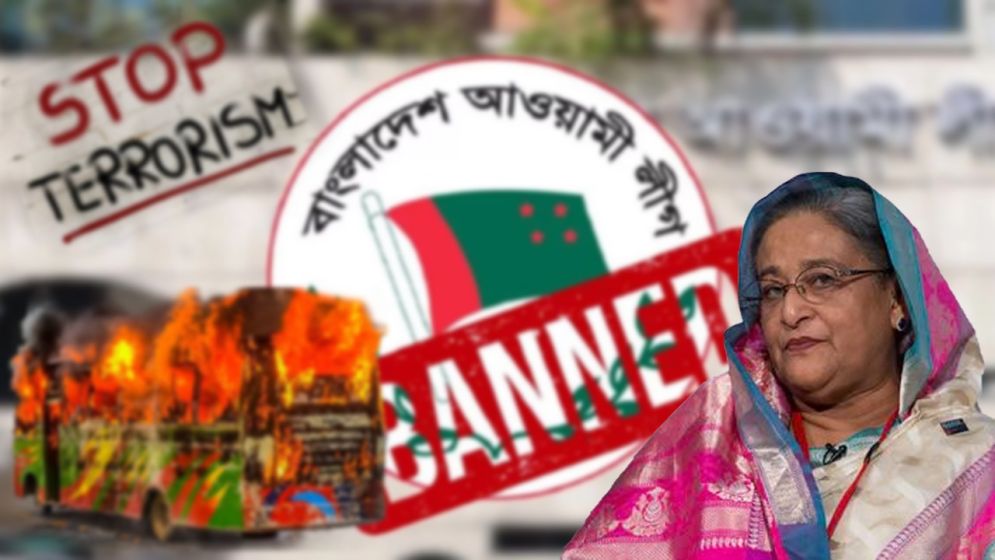
Exposing what many now describe as the Awami League’s covert terror network is not a distraction from justice; it is the only way to prevent the next attack.
Hadi’s fate now rests with his doctors and, ultimately, with forces beyond human control. But the fate of others—journalists, organizers, candidates, activists—depends on whether the infrastructure behind the violence is dismantled in time.
The evidence points to a grim calculation: destabilization ahead of an election requires bodies, and one victim is never enough. If this network is left intact, it will not stop with Hadi.
The strategy itself betrays desperation. The Bangladesh Awami League no longer appears capable of sustaining either a long-term mass movement or an extended campaign of violence.
Organizational decay and eroded legitimacy have narrowed its options. What remains is disruption—short, sharp shocks meant to rattle the political process before the window closes.
That window is closing fast. Party insiders appear acutely aware that the post-election environment will be far less forgiving. A new government, backed by public exhaustion with political violence, is likely to pursue an aggressive crackdown that will further constrict the party’s operational capacity.
This is not the posture of a movement preparing for a democratic resurgence; it is the behavior of one racing against time.
-69413f0858b09.png)
Desperate measures
Perhaps most striking is where the scrutiny has finally landed. For the first time, the Awami League’s cultural and media ecosystem—its talk-show regulars, intellectual enablers, and narrative managers—is facing sustained questioning.
These figures have long functioned as the party’s soft-power shield, laundering hard realities through familiar television studios and opinion pages.
While they may still appear on screens for now, the risk of boycott is real.
Such a boycott would matter. Talk shows derive their authority from access and credibility. Strip away willing platforms, and the performance collapses.
Deplatforming does not silence speech; it withdraws the unearned legitimacy that allows partisan messaging to masquerade as neutral analysis. If that legitimacy erodes, so too does the ability to shape the public narrative in moments of crisis.
The pursuit of Hadi’s attackers must continue relentlessly. But justice will remain incomplete—and the public unsafe—until the networks that enable political violence are brought into the open.
The Awami League’s current posture resembles that of a seasoned finisher in one-day cricket, the kind perfected by players like Michael Bevan.
When wickets tumble early and the target looks out of reach, the objective shifts. Survival comes first. Singles are nudged into gaps. Risks are deferred.
The game is not won in a flurry but compressed—methodically—into the final overs, where one decisive burst can still alter the outcome.
That, increasingly, appears to be the Awami League’s political calculation. The middle overs have been played out. Organizational strength has ebbed, street power has thinned, and international goodwill has evaporated.
Rather than attempt a sustained campaign it cannot afford, the party seems intent on squeezing the contest into a narrow, volatile endgame—where disruption, not persuasion, becomes the currency of relevance.

Where lies the risks
In this late phase, the targets are telling.
With the BNP and Jamaat-e-Islami already mobilized and battle-hardened by decades of confrontation with the Awami League’s coercive machinery, attention has shifted elsewhere.
The focus has turned to the July Revolutionaries—young, decentralized, and politically unseasoned, despite having played a decisive role in bringing down Sheikh Hasina. Their moral authority is considerable.
Their institutional defenses are not.
This imbalance creates opportunity for infiltration. The shooting of Hadi exposed precisely that vulnerability.
Awami League operatives, long practiced in blending intimidation with plausible deniability, face far greater resistance in BNP or Jamaat gatherings, where internal discipline and counter-surveillance are ingrained.
In the July movement, by contrast, openness is a virtue—and therefore a weakness. Chaos is easier to manufacture where trust has not yet learned suspicion.
The aim is not mass conversion; it is confusion. A single act of violence, strategically placed, can fracture alliances, invite state overreaction, and poison public sympathy.
As in cricket’s final overs, the margin for error is slim, but the payoff is disproportionately large.
What makes this moment dangerous is not the strength of the Awami League, but its weakness. Political actors in decline are often the most reckless, unburdened by the responsibility of governing and driven instead by the imperative to remain relevant at any cost.
The coming weeks may determine whether Bangladesh recognizes this endgame for what it is—or allows a dying strategy to set the terms of the final play.
—
Nayel Rahman is a political analyst