


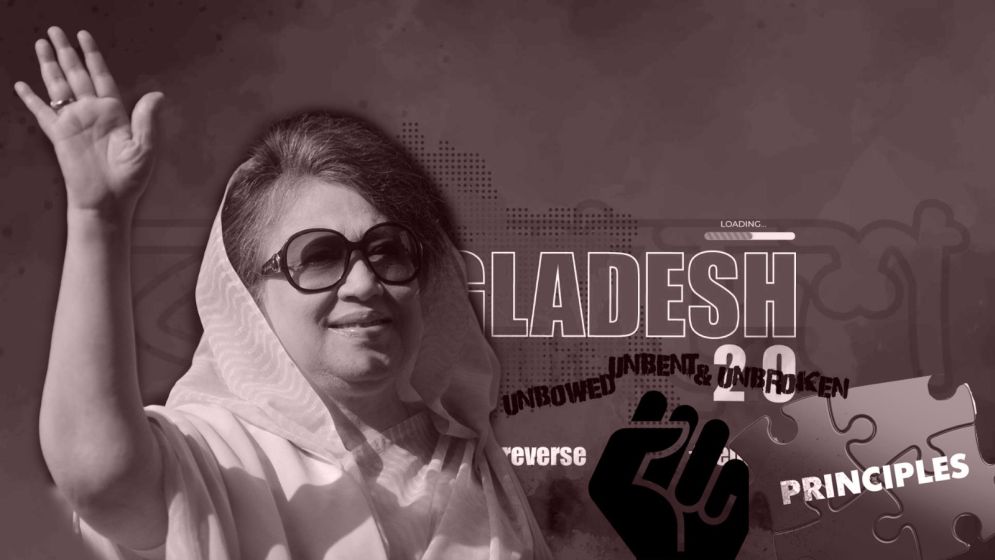
I was never a partisan of the Bangladesh Nationalist Party (BNP), nor a devotee of Begum Khaleda Zia.
For years, I absorbed the country’s political history through a familiar, comfortable prism—a secular, urbane narrative shaped by institutions like Prothom Alo, where skepticism toward the BNP was reflexive.
That certainty collapsed after 2014, when Bangladesh slid unmistakably toward what can only be described as BAKSAL 2.0: a single-party ethos without the formal declaration, authoritarianism without apology.
That moment forced a reckoning. A reassessment. To understand what Bangladesh had become, I had to re-examine what it had lost—and who had been most misrepresented along the way.
In doing so, I arrived at an uncomfortable conclusion that few figures have been more persistently distorted by Bangladesh’s secular self-image than Ziaur Rahman and Khaleda Zia.
By then, I was no longer consuming politics passively. Social media, personal activism, and exposure to unfiltered public sentiment stripped away the curated narratives.
What emerged was not a country yearning for enlightened authoritarianism, but one repeatedly betrayed by a class that claimed moral superiority while monopolizing the right to define “progress.”
In that story, Ziaur Rahman and Khaleda Zia were moral obstacles to be erased.
I realized the parallel arc between their political fortunes and the country’s own sense of possibility. As Ziaur and Khaleda were delegitimized and eventually neutralized, the space for popular agency narrowed.
Opportunities contracted. Dissent became suspect. And the very forces that claimed to guard Bangladesh against authoritarian relapse ended up midwifing its return.
BAKSAL 2.0 arrived because collective memory of one-party rule runs deep. It also arrived because a cadre of “secular neutrals”—armed with the language of moral equivalence and bipartisan disdain—convinced themselves that anything was preferable to allowing political competition they could not control.
In their “out of the frying pan into the fire” logic, they empowered an absolute monster while congratulating themselves for having risen above partisanship.
They could do this because they controlled the narrative—and still largely do.
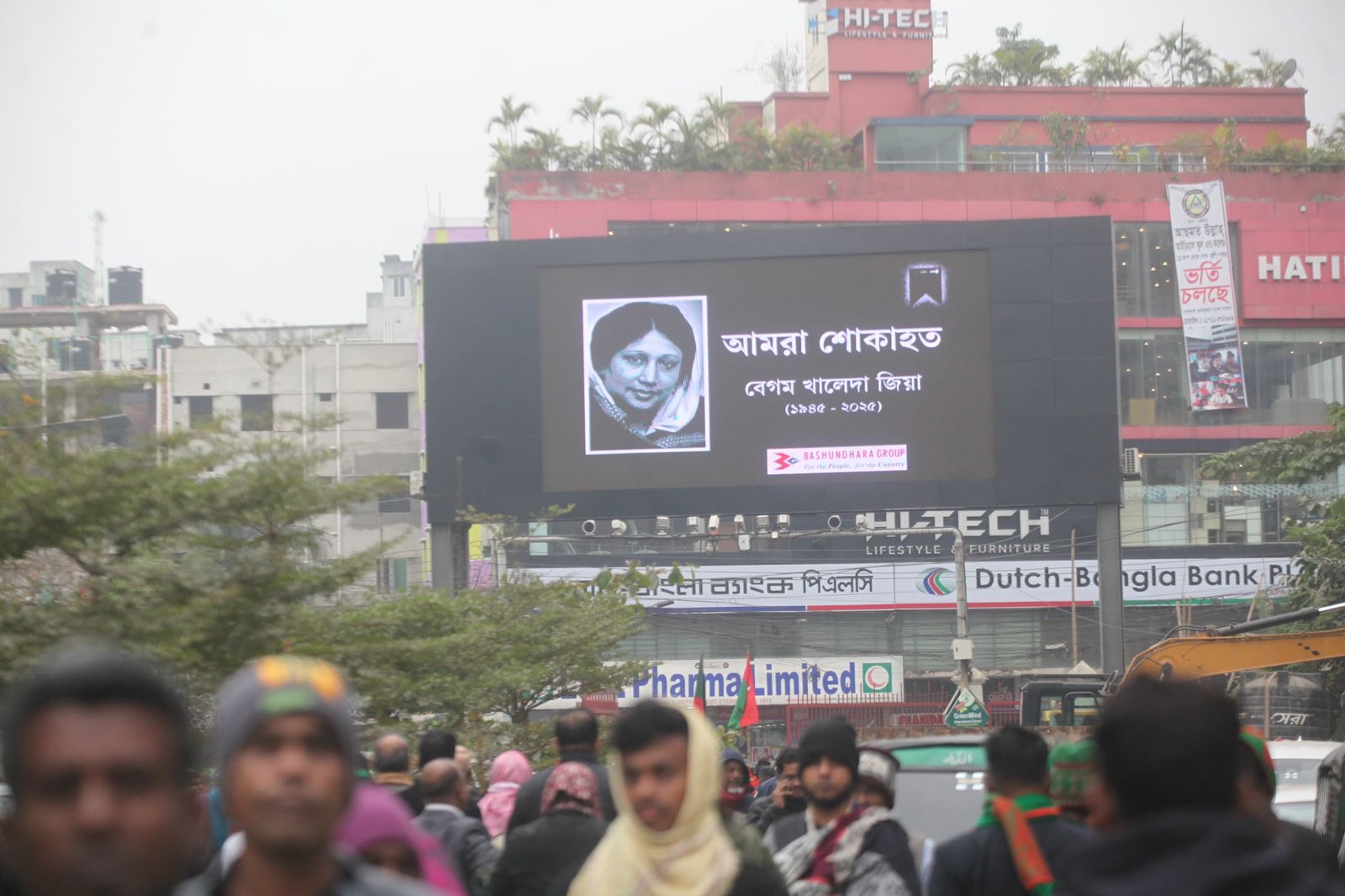
The faulty vs true narrative
The fragility of that narrative becomes clear when one entertains a counterfactual.
Suppose Ziaur Rahman had been killed not when he was, but earlier—on November 3 or 4—and Colonel Taher had emerged as Bangladesh’s paramount statesman. What kind of country would have followed?
I see a Cambodia—or, at best, a Burma.
The historical record offers little reason for optimism. Pol Pot, too, spoke the language of justice and re-education before emptying cities, forcing citizens into agrarian labor, and exterminating the educated in the name of ideological purity.
This is not an exotic comparison. The intellectual scaffolding exists at home. Figures like Hasanul Haq Inu, Rashed Khan Menon, Motia Chowdhury—and even the otherwise respected Farhad Mazhar—share a political imagination in which coercive “reordering” of society is not a bug but a feature.
Among segments of the Bangladeshi left, there has long been an almost romantic obsession with turning soldiers into farmers. The question is never asked: if soldiers farm, what becomes of farmers?
The answer, historically, is catastrophe.
These were not harmless ideas. They were pathways to ruin. And it was precisely the presence of Ziaur Rahman—and later Khaleda Zia—that blocked Bangladesh from tumbling down that path.
To acknowledge this is not to sanctify them or absolve their failures. It is simply to recognize that Bangladesh’s secular hypocrisy depended on their erasure.
And the price of that erasure is the country we inhabit today.
In retrospect, Bangladesh’s escape from the gravitational pull of permanent one-party rule was neither inevitable nor accidental. After the collapse of BAKSAL, there was—whether one believes in providence or not—a narrow window in which the country could have slid into prolonged military domination or ideological extremism.
Ziaur Rahman closed that window with remarkable speed. In just five years, he stabilized a traumatized state by neutralizing repeated coup attempts from within the army, reopening political space, restoring freedom of expression, and allowing every party—left, right, and otherwise—to compete.
What he built was order, and institutions.
Zia’s most consequential intervention, however, was economic. He dismantled the rhetoric of state socialism and replaced it with the infrastructure of a capitalist economy: foreign investment, export-oriented industry, labor migration, and the early scaffolding of what would become the garment sector.
Power, for the first time since independence, began to flow outward—to citizens rather than to commissars. Once democratic participation was institutionalized, the military lost whatever residual legitimacy it claimed as a governing force.
These institutions were deliberately impersonal. They did not privilege “brothers,” “friends,” or ideological loyalists.
In that sense, they were the structural opposite of Mujib’s BAKSAL—a system built not on charisma or coercion, but on rules.
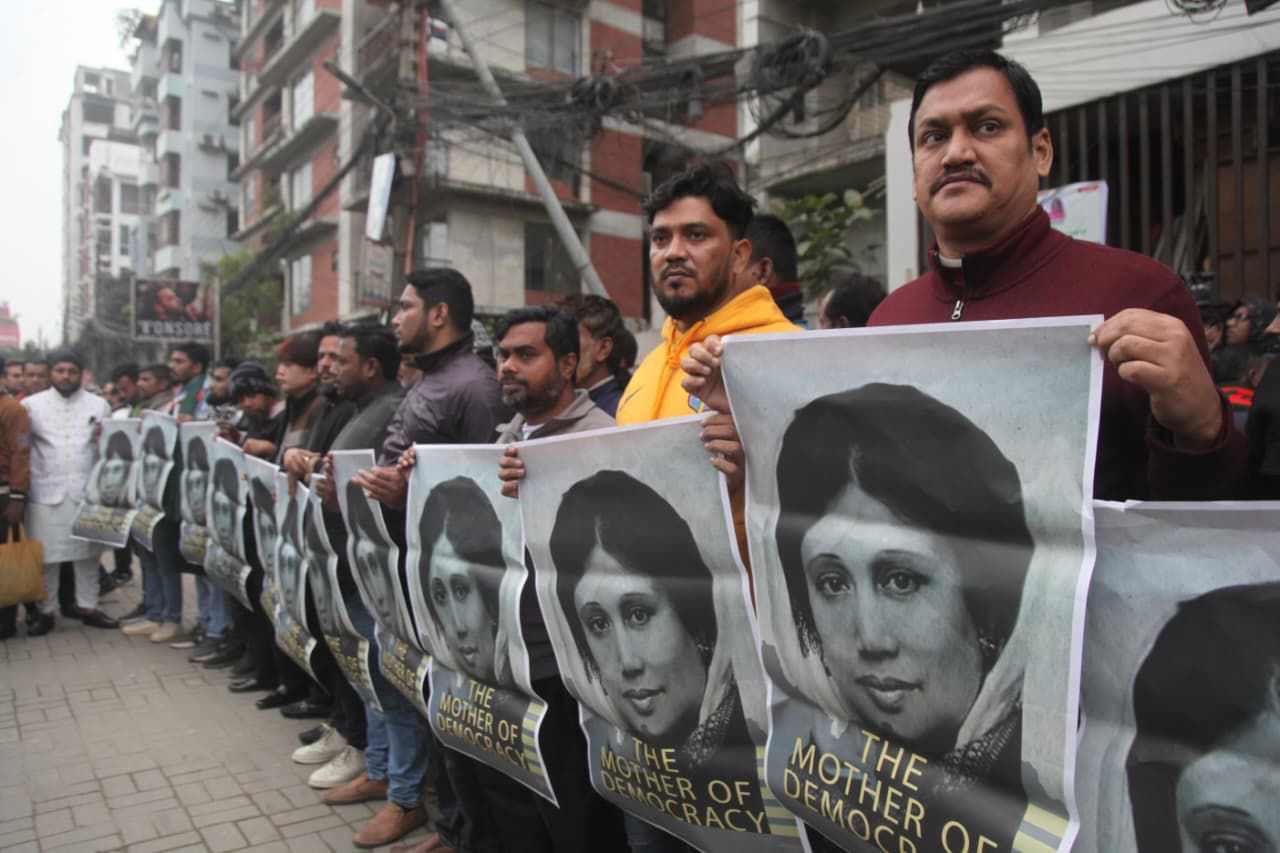
Building basement for “democracy”
The same logic applies to Khaleda Zia’s entry into politics.
Had she chosen a private life after Zia’s assassination, the anti-Ershad movement would likely have collapsed before it cohered.
Who, exactly, would have stood in opposition?
The leftist figures often retroactively cast as democratic stalwarts lacked popular legitimacy and mass appeal. Sheikh Hasina’s 1986 accommodation with Ershad was an early signal.
Without Khaleda’s refusal to bend, Ershad could have absorbed or neutralized the entire opposition and ruled for another decade.
This is an inconvenient truth: outside of Sheikh Hasina, none of the figures in that political cohort possessed electoral legitimacy.
The romantic belief that leftists command votes because of personal “honesty” misunderstands Bangladeshi political psychology. Voters sensed—inarticulately but accurately—their attraction to a totalizing state.
That is why no national unity could ever have formed around them.
The post-1991 period makes the counterfactual even clearer. Remove Khaleda Zia from the equation and imagine Sheikh Hasina in power, with leftist groups performing the role of opposition.
One likely outcome would have been a hybrid regime—electoral on the surface, militarized beneath—akin to Burma’s civilian-military condominium.
Hasina had already demonstrated her willingness to accept power under such an arrangement; her 1986 alignment with Ershad was explicit preparation for it.
The other possibility is starker. Had Hasina fully consolidated power, BAKSAL 2.0 would not have waited until the 2010s. It would have arrived in the early 1990s.
What stopped it was Khaleda Zia. Beneath her restrained, almost deferential public persona was an iron discipline—an unyielding refusal to trade liberty for convenience or consensus.
Without that obstinacy, Bangladesh would not have known what a free press feels like, what dissent sounds like, or how political alternation works.
The brief glimpses of those freedoms between 2001 and 2006 now read less like routine democratic cycles and more like a vanished inheritance—one whose value is only fully understood after its loss.
This is only the story of press freedom. One can only speculate about what would have happened to export processing zones, foreign relations or economic integration had Bangladesh taken a different turn.
Counterfactuals cannot yield certainty. But history offers enough evidence to say this much: the Bangladesh we recognize—even in its failures—owes its remaining democratic muscle memory to the interventions of Ziaur Rahman and Khaleda Zia.
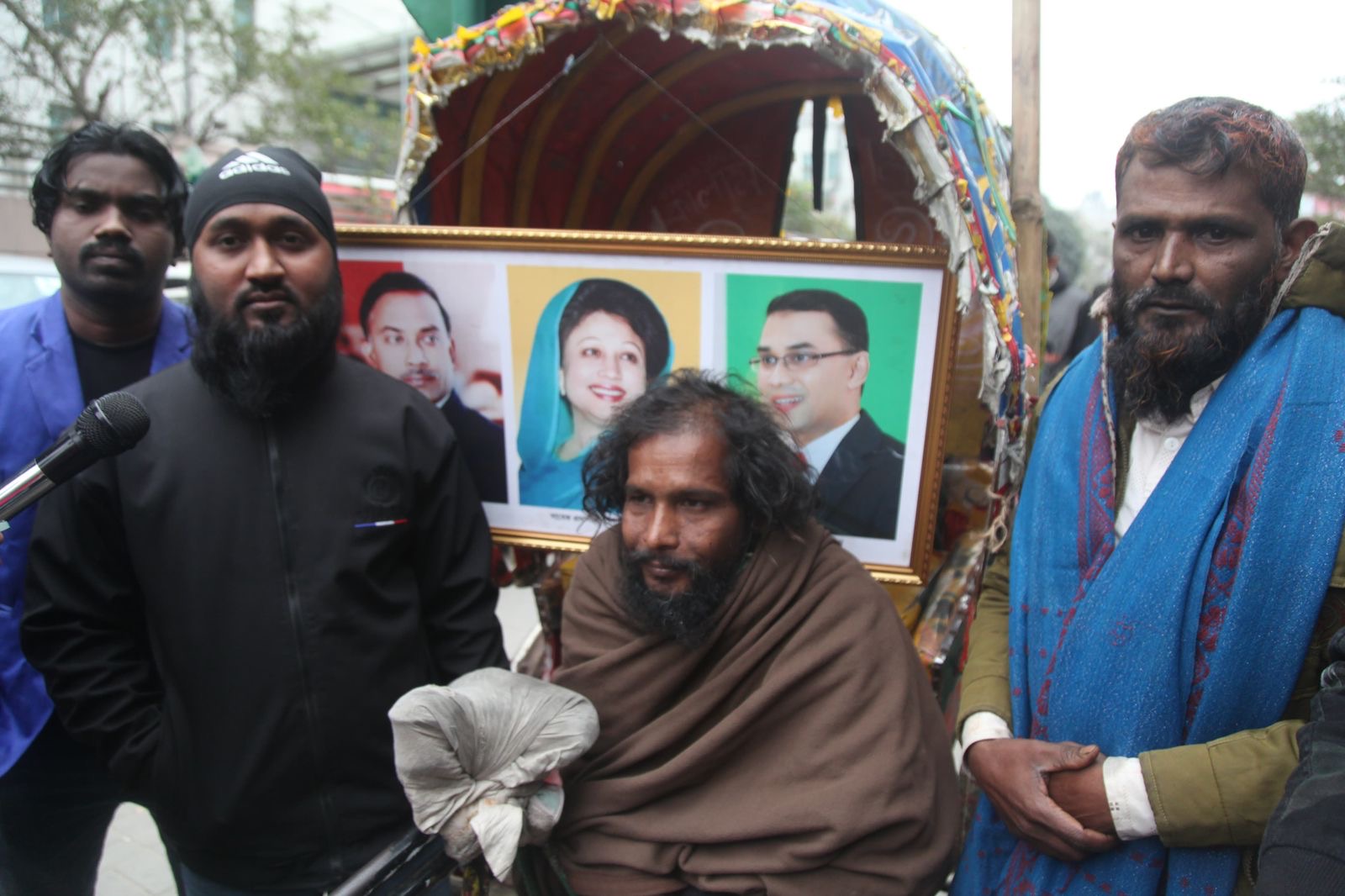
Khaleda Zia’s legacy
She was not flawless. State-building is not an exercise in moral purity; it is a sequence of errors, misjudgements, corrections, and compromises.
What distinguished Khaleda’s time in office was not the absence of mistakes, but the presence of restraint. When missteps became clear, she attempted—sometimes imperfectly—to correct them within her own tenure.
She did seek to consolidate power and, at moments, relied on extra-legal tools to do so.
But she never constructed a moral alibi for mass slaughter, never divided the nation into an existential “us versus them,” never parceled the state out—one share to the army, another to India, another to cultural arbiters, another to oligarchs.
Crucially, when public legitimacy was questioned, she responded to it. Bangladesh has never produced saints—no Joan of Arc, no Caliph Umar waiting in the wings.
Judged within the constraints of her time, her own limitations, and the often-mediocre quality of those around her, it is not even clear that more was structurally possible. She governed in permanent opposition to a rival intoxicated by absolute power and destruction. Survival itself was an achievement.
Take the creation of the Rapid Action Battalion (RAB), now rightly scrutinized. Its origins cannot be understood without recalling the years preceding it.
Between 1996 and 2001, Bangladesh endured a near-collapse of law and order: unchecked political violence, mass intimidation, serial bombings, and a judiciary too weak to respond.
A paralyzed police force and a terrorized public produced the conditions in which exceptional instruments were normalized. This does not absolve Khaleda of responsibility—but it does situate it within a state already unraveling.
Even today, her limitations are visible. Yet in comparative terms, she fares better than many of her contemporaries.
Measured against leaders like Indira Gandhi or Sirimavo Bandaranaike, or against female heads of government across the developing world in the 1980s and 1990s, Khaleda Zia stands not behind but ahead—less brutal, less absolutist, less consumed by the illusion of historical destiny.
And yet, the project to portray her as a “monster” succeeded. Not because it was accurate, but because it was narratively useful.
That secular hypocrisy—sometimes deliberate, often lazy—prepared the ground for BAKSAL 2.0. Post-1971 politics in Bangladesh was, at its core, a struggle against the Awami League’s most destructive instinct: I liberated the country, therefore I own it.
No one challenged that claim more consistently, or more effectively, than Khaleda Zia.
In essence, BAKSAL 2.0 is not merely the story of Khaleda Zia losing power. It is the story of the Bangladeshi people losing their right to choose and to speak.
And to live without fear.
That reality remains invisible to those still inhaling decades of “pro-people” propaganda—carefully curated by cultural gatekeepers, social stalwarts, media institutions, and ideological networks that mistook moral certainty for moral authority.
Clear that smoke, and history looks very different.
Rest in peace, Begum Khaleda Zia. Had you not existed, Bangladesh would resemble Burma today. That you lived to witness the collapse of BAKSAL 2.0 and the re-emergence of political freedom is a rare justice. Your half-century of struggle earned at least that dignity.
May Allah grant you Jannah.
—
Zia Hassan is a writer and analyst