

Why Bangladesh now feels like a David Lynch film…

Mikail Hossain
Publish: 05 Feb 2026, 07:40 AM

After Hiroshima and Nagasaki were reduced to shadows, American military planners confronted an unsettling problem during the Cold War on how to make nuclear weapons more “usable.”
Their answer was the neutron bomb.
Formally called the Enhanced Radiation Weapon, the neutron bomb was designed to invert the logic of mass destruction. It would minimize blast and heat while maximizing lethal radiation. The point was not to flatten cities but to empty them—to kill people and leave property standing.
Officially, it was pitched as a tactical weapon aimed at Soviet tank crews. In practice, its strategic imagination extended far beyond the battlefield, envisioning detonations over populated areas that would erase human life while preserving infrastructure for future occupation.
Leonid Brezhnev captured the moral obscenity of the project with brutal clarity when he called it “the ideal capitalist bomb.” A weapon that kills people but protects buildings.
That paradox animates poet Helal Hafiz’s haunting line, “You understand the Neutron Bomb, but you don’t understand people.”
If the neutron bomb represents the perfection of anti-personnel warfare, its mirror image lies in anti-material tactics….strategies that avoid mass killing while systematically destroying the conditions that make life possible.
Long before Israel’s intentions in Gaza became unmistakable, it had refined such a strategy under the bureaucratic euphemism of “punitive demolition.”
Since the 1960s, Palestinian homes, farms, and civilian structures have been razed under shifting legal and security justifications. The effect has been constant–-the maintenance of a permanent refugee condition and the slow erosion of dignity.
Also it perfects the normalization of collective punishment imposed on an entire population for the alleged actions of a few.
This method of destruction is precise in its cruelty. Buildings collapse. Livelihoods disappear. Lives are unmade. And yet there is little blood on camera. No spectacle of gore to provoke international outrage.
The violence is real, but its optics are sanitized.
That absence of visible brutality has allowed Israel, for decades, to present itself as a moral authority—invoking the Holocaust as a political shield. Until recently, this selective devastation of civilian infrastructure was the central feature of its military doctrine.
A similar logic now animates what might be called “bulldozer politics” under India’s BJP, where demolition has become a substitute for due process.
I have described these two distinct phenomena—the deliberate destruction of people and the deliberate destruction of what people need to survive—in order to point toward a third phenomenon, one I believe has unfolded in my own country.

The uncanny similarities
Bangladesh belongs squarely within this framework—and understanding that framework is essential to understanding the country’s current crisis.
Political violence is often analyzed through the destruction of people or the destruction of things. But philosophy points us to a third domain beyond both subject and object: intersubjectivity—the shared world humans construct through language, trust, norms, and collective meaning.
Concepts such as “justice,” “economy,” “rule of law,” and even “humanity” do not reside inside any single individual, nor do they exist naturally in the world. They are sustained only through social agreement and institutional integrity.
It is this intersubjective world that has been systematically demolished in Bangladesh during the Awami League’s 16-year rule. What occurred was neither merely repression nor simple corruption, but something closer to a neutron bomb detonated inside the country’s meaning-making systems—leaving the façade of institutions intact while hollowing out their substance.
The pattern becomes unmistakable when examined sector by sector.
Economically, foreign reserves were siphoned off to overseas casinos through collusion between political actors and the central bank, while domestic banks were looted via fraudulent loans—losses later concealed by printing money.
Politically, the electoral system was converted into theater. Officials across hundreds of sub-districts were mobilized to stuff ballot boxes under cover of darkness in all 300 constituencies.
The judiciary, once the last refuge of the citizen, was neutralized when a sitting chief justice was assaulted and driven into exile, clearing the way for verdicts delivered on demand. Education was subjected to a scorched-earth policy so thorough that its consequences will echo for generations.
What was destroyed was not simply governance, but coherence—the shared belief that words mean what they say, that institutions do what they claim, that outcomes follow rules rather than orders.
Bangladesh’s intersubjective infrastructure collapsed while its physical infrastructure rose.
The most insidious feature of this form of violence is its invisibility. Physical violence announces itself through bodies and blood, allowing societies to recognize and debate it.
In Bangladesh, subjective violence unfolded quietly. Enforced disappearances, secret prisons like Aynaghar, people erased rather than executed in public. There were no spectacles to shock the conscience—just absences.
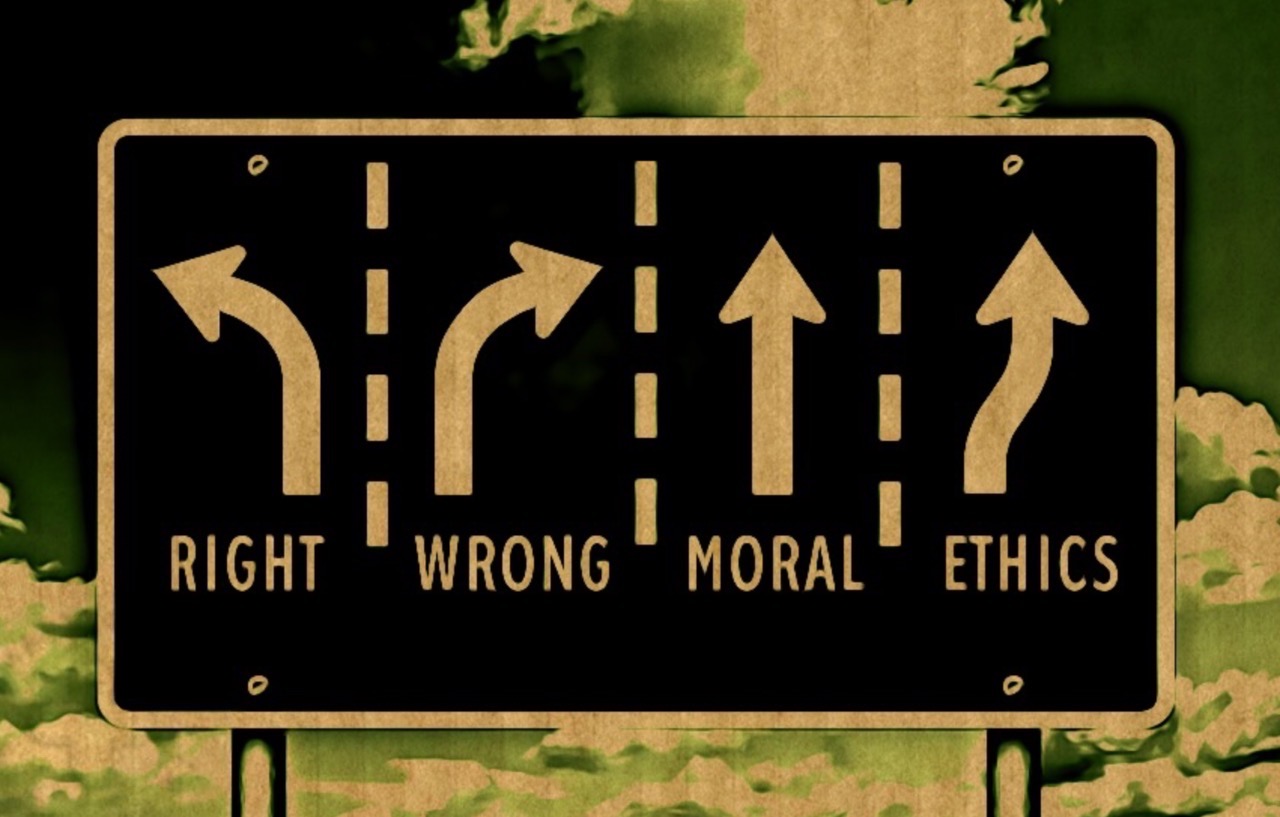
Hollowing out the core
At the same time, objective reality was carefully managed through a narrative of “development.” Debt-financed megaprojects of concrete and steel projected modernity and momentum, masking institutional decay beneath polished surfaces.
What remained was a country where buildings stood, budgets circulated, courts functioned, and elections occurred—but none of them meant what they were supposed to mean.
And when meaning collapses, societies do not merely suffer injustice. They lose the ability to recognize it.
Because the very machinery through which a society produces shared meaning has been dismantled, this violence is extraordinarily difficult to name, let alone confront.
When language, trust, and institutional credibility collapse simultaneously, there is no stable framework left to organize outrage or even comprehension. The situation recalls the biblical story of the Tower of Babel in which builders were unable to understand one another, watching their grand structure fail for lack of a common tongue.
That is why conventional political vocabulary feels inadequate here, and why analogies to neutron bombs or punitive demolition become necessary rather than rhetorical excess.
This phenomenon, however, is not unique to Bangladesh, nor can it be explained solely through the actions of the Awami League. Since the late 1970s, neoliberal late capitalism has pursued a quieter but more radical project: the systematic dismantling of humanity’s intersubjective scaffolding.
Social trust, public institutions, communication machineries, moral language—all are treated as obstacles to a purified market logic. The ideal individual is stripped of collective supports and left alone before a reality mediated only by price signals.
In Bangladesh, that ideology arrived through the Awami League in the aftermath of the 2008 global financial crisis. The difference is that while the party succeeded in atomizing society—reducing citizens to isolated economic units—it failed to deliver even the market stability promised by neoliberal doctrine.
What remained was not efficiency, but predation; not growth, but organized extraction.
As the political crisis deepens, it is now acquiring an unmistakably philosophical character. Under normal conditions, we rarely think about how systems work. We only notice them when they break.
No one reflects on plumbing—until the toilet stops flushing. Bangladesh is now forced into that uncomfortable moment of realization, compelled to ask foundational questions about how power, money, law, and meaning are supposed to circulate at all.
After sixteen years of systematic erosion, every intersubjective pillar of political and civic life has been compromised. The country has been thrust into a state where basic assumptions no longer hold—where institutions exist just in form, not in function.
The result resembles a David Lynch film. A world governed by absurdity, where reality is visibly distorted yet its inhabitants cling to routine in order to remain sane. Everyone knows the monetary system and law enforcement apparatus primarily serve elite interests, yet people still go to work trusting the currency in their wallets and sleep at night assuming the police will arrive if called.
The contradiction is sustained through habit, instead of belief.
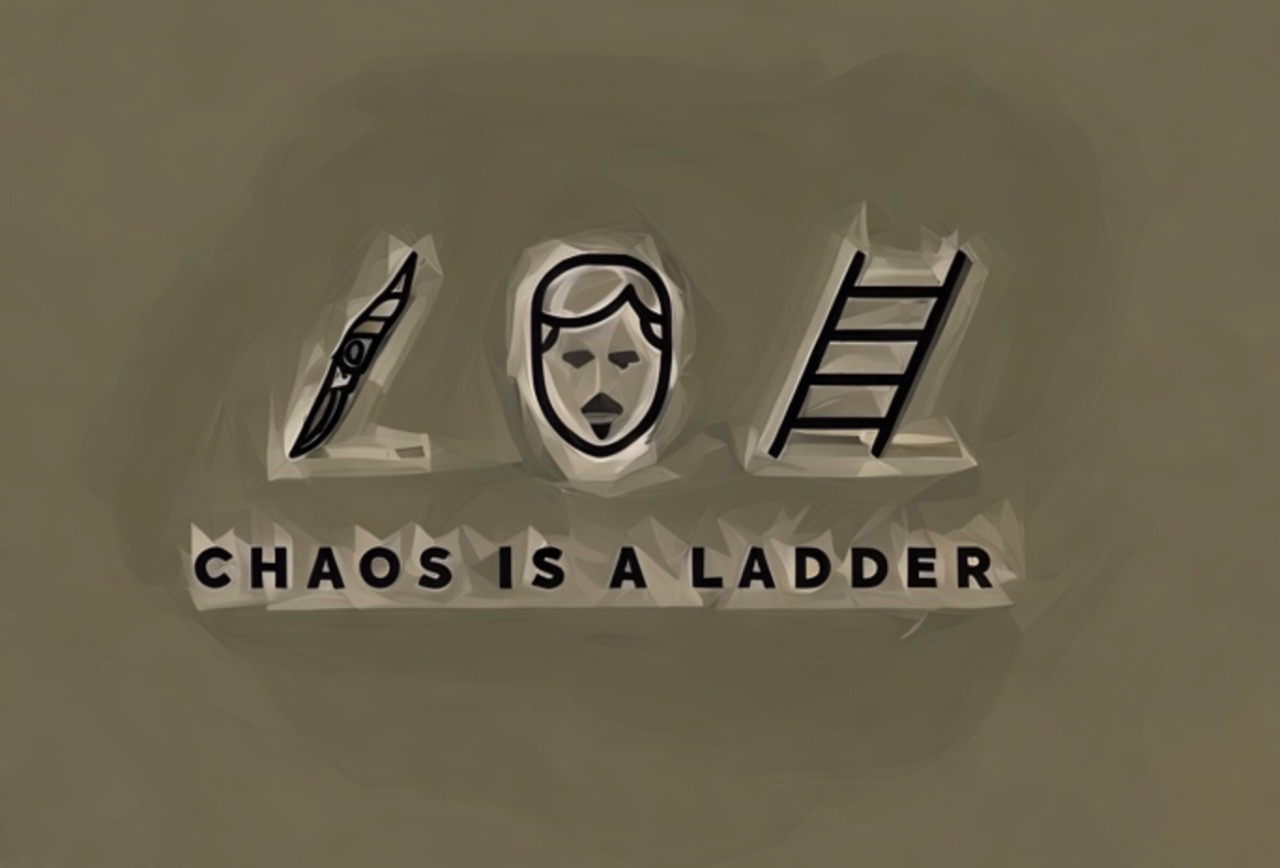
Chaos is a ladder
But like Lynch’s characters, this dissonance does not stay buried. It returns through anxiety, rumor, nostalgia, and political fantasy. Such a condition is inherently unstable.
Because when meaning evaporates, people search desperately for substitutes. The widespread yearning for an imagined era of moral clarity—“better days”—is now being weaponized by right-wing forces offering theocratic master narratives as an escape from ambiguity.
They promise order in place of chaos, certainty in place of collapse. History suggests that when a society loses its shared language, it becomes dangerously susceptible to anyone willing to invent a new one.
No master narrative—religious or otherwise—can override material reality on the ground. The vacuum the Awami League has created is not the product of failed storytelling; it is the result of a carefully engineered political economy.
Meaninglessness was built into the system through incentives and punishments. And systems designed to hollow out social meaning eventually consume everything in their path, including religion itself.
History offers a grim reminder: shared faith did not prevent Pakistan’s rulers from committing genocide against their so-called religious kin.
Yet meaninglessness is not only corrosive; it is also catalytic. As the writer Parvez Alam has observed, a void can function like a blank page—empty, but full of possibility. What has collapsed is inherited assumptions. That creates an opening.
The responsibility now falls to political thinkers, organizers, and citizens willing to engage at a foundational level. Bangladesh cannot simply swap one narrative for another; it must reconstruct the very concepts that make political life intelligible.
What is the economy for, and whom should it serve? What does representation actually mean, and where has it been structurally compromised? How should ideas of environment and ecology be integrated into a country facing climate precarity?
This is not a matter of reform at the margins. It is a task of redefinition. The terrain is vast, the work demanding—but the alternative is surrender to nihilism dressed up as order. There is no shortcut around this moment, and no substitute for collective intellectual labor.
As Walter Benjamin once wrote, “It is only for the sake of those without hope that hope is given to us.”
—
Mikail Hossain is a writer and analyst