

The brutal logic behind Bangladesh’s fuel and food lines

Mikail Hossain
Publish: 28 Mar 2026, 05:15 PM
-69c7b86e9d71d.png)
Before confronting the spectacle of scarcity, now visible in Bangladesh’s fuel crisis, it is worth recalling a blunt axiom from “Systems Thinking.”
The purpose of a system is what it does.
A system that persistently fails at its stated goals is essentially not malfunctioning….it is revealing its true function. This is because there is no analytical value in insisting that a system is meant to achieve what it consistently does not.
If it produces something else, repeatedly and predictably, then that outcome is the point.
Apply that principle to the modern Bangladeshi state. After more than half a century of institutional development and policy experimentation, one still encounters the same patterns.
Routine indignity, normalized scarcity, and a quiet but pervasive disregard for human life at the margins.
These are outputs instead of anomalies. And if they persist across time and policy regimes, then the uncomfortable conclusion is that the production of that indignity is probably not an accidental failure of the system, rather it is its very operational purpose.
This becomes clearest in moments when the system is forced to display itself openly. Consider the images of crowds running behind trucks operated by the Trading Corporation of Bangladesh….people pushing and injuring themselves for a chance to secure subsidized essentials.
These scenes are often narrated as crises. Breakdowns in distribution or temporary mismatches between supply and demand. Alongside them come the familiar chorus of “solutions”--digitized ration cards, permanent distribution outlets, better logistics, more efficient management.
These responses are comforting because they allow the problem to be framed as technical. They assume that the system’s goals are sound and that only its execution needs refinement. But that assumption collapses under scrutiny.
The queues, the indignities—these are not glitches in an otherwise functional machine. They are the machine working exactly as designed.
-69c7b775f1a5a.jpeg)
The fault in the systems
To understand why, one must begin with a simple question: what is rationing?
In its most abstract form, rationing is the coordination of limited resources with effectively unlimited human demand. The central issue is not whether rationing occurs—it always does—but how it is carried out, and according to what logic.
In Bangladesh, as in most of the world, the dominant rationing mechanism is the price system. Money, whether in taka, or dollars, functions as a universal ration card. It determines who gets access to goods and services, and who does not.
When supply is scarce and demand is high, prices rise, excluding those who cannot pay. When supply exceeds demand, prices fall, expanding access. This is presented as a neutral, even natural mechanism. An impersonal way of allocating resources efficiently.
But neutrality is an illusion. The price system does not eliminate rationing; it obscures it. It transforms visible exclusion—queues and waiting lists—into invisible exclusion mediated by income. Those who cannot afford the price simply disappear from the line.
When the state intervenes to fix prices below market levels, as with subsidized goods distributed through TCB trucks or services provided in public hospitals, it does not abolish rationing. It merely shifts its form.
Economists call this non-price rationing: allocation through mechanisms other than price. But these mechanisms are no less exclusionary. They are simply more visible—and often more brutal.
Consider the TCB trucks. Goods are sold at artificially low prices, below what the market would otherwise bear. This creates excess demand: far more people want the goods than can be supplied.
The system must therefore find ways to reduce the number of successful claimants without raising prices. It does so by introducing alternative barriers.
Some of these are explicit. Quotas limit how much each person can purchase—five kilograms of rice, two kilograms of lentils. A household that needs more must return multiple times, sacrificing time and income. Others are implicit.
The use of mobile trucks rather than fixed shops introduces uncertainty: one must locate the truck, often at short notice, and be present at the right time. The requirement to stand in long lines under the sun imposes a physical cost.
The unpredictability of supply, the abrupt closure of distribution, the often hostile behavior of staff….all function as deterrents.
These are integral to the system’s operation. If the process were made convenient and dignified—if it resembled the efficiency of a Starbucks outlet—demand would surge to unmanageable levels. The very inefficiencies that appear as failures are, in fact, mechanisms of control.
They ensure that only those willing or able to endure the barriers—time, discomfort, physical toll and humiliation—gain access.
Public hospitals operate under a similar logic. Here, too, services are nominally subsidized or free, creating excess demand. And here, too, the system responds by introducing non-price barriers.
Patients wait for hours, sometimes days. They navigate overcrowded wards, limited equipment, and overworked staff. The experience is often degrading. Yet these conditions serve a function: they ration access to care by imposing costs that are not monetary but are nonetheless real.
-69c7b79297b28.jpeg)
Logic of scarcity
It is tempting to attribute these conditions to underfunding, poor management or corruption.
These factors may play a role, but they do not fully explain the persistence and consistency of the pattern. The deeper issue lies in the structure of incentives. Within these systems, individuals act in ways that make sense given their constraints.
The resulting outcomes, however, are collectively perverse. No one needs to design humiliation explicitly; it emerges from the interaction of scarcity, demand and institutional design.
Non-price rationing is not inherently unjust. In situations of acute crisis—war, natural disasters, sudden supply shocks—it can be essential. Soup kitchens and temporary distribution systems can save lives.
But when such mechanisms become permanent features of a system that otherwise relies on market allocation, they take on a different character. They become spectacles: visible demonstrations of state benevolence that coexist with, and ultimately reinforce, underlying inequalities.
This duality—market allocation for most, rationed relief for some—creates a peculiar form of political theater. Subsidized lentils are distributed in public view, while the broader economic structure continues to generate the very scarcity that makes such distributions necessary.
The spectacle reassures observers that something is being done, even as the underlying dynamics remain unchanged.
The logic underpinning this arrangement is neither new nor uniquely Bangladeshi. It is rooted in a long intellectual tradition that treats scarcity as a condition to be managed—and, in some cases, preserved.
In The Wealth of Nations, Adam Smith argued that allowing market forces to operate freely during periods of scarcity would, in the long run, ensure stability. Intervening to suppress prices, he suggested, could exacerbate shortages.
Later thinkers made the underlying logic more explicit. Karl Polanyi, in his analysis of 19th-century market society, highlighted how hunger functioned as a disciplinary mechanism—a “silent pressure” that compelled individuals to work and conform.
Karl Marx described a similar dynamic in his concept of the “mute compulsion of economic relations,” whereby economic necessity enforces social order without overt coercion.
Taken together, these ideas point toward a stark conclusion: systems built around market allocation rely, at some level, on the persistence of deprivation. If everyone had guaranteed access to food, healthcare and basic security, the pressures that drive labor and maintain economic hierarchies would weaken.
Scarcity, or the threat of it, is not merely a constraint; it is a tool.
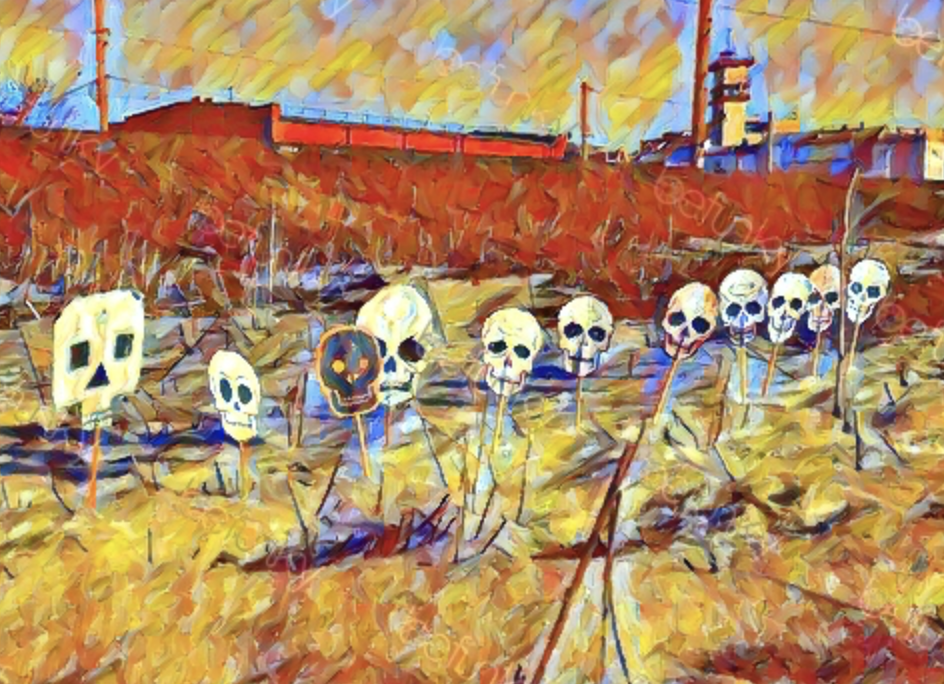
Emergence of necro-economics
This is what might be called a necro-economy: a system in which the possibility of suffering—of going without, of falling through the cracks—is an integral part of its functioning.
It does not require that people die, but it requires that the risk of death, or of severe hardship, remain real and visible. It is this risk that disciplines behavior, structures choices, and sustains the system.
Within such a framework, the role of institutions like TCB or public hospitals becomes clearer. They are not alternatives to the market system but complements it. They provide limited relief, enough to prevent complete collapse or unrest, but not enough to fundamentally alter the distribution of resources or power.
They soften the edges of the system without changing its core.
The image of a woman collapsing while chasing a truck, or a father running through a hospital corridor with a sick child in his arms, is therefore a moment in which the system’s logic becomes visible.
The truck pulling away, leaving people scrambling, is not fundamentally different from a market that denies access to those without money. Both are expressions of the same underlying principle: access is conditional, and those conditions will exclude some.
The danger lies in misinterpreting these moments. It is easy to respond with outrage, to demand better management, more efficient systems, smarter policies. These responses are not wrong, but they are insufficient.
They address the symptoms without confronting the structure that produces them.
Equally problematic is the tendency to retreat into technocratic optimism—the belief that better data, improved logistics, or innovative delivery mechanisms can resolve fundamentally political problems.
The call for “scientific” distribution systems, digitized cards, or optimized supply chains assumes that the issue is one of coordination rather than distribution. It leaves untouched the question of who gets what, and why.
What is required instead is a shift in perspective. Rather than asking how to make these systems work better, one must ask what they are designed to do. Rather than accepting their stated purposes, one must examine their actual outcomes.
Such clarity has historical precedents. In late 19th-century Russia, debates between Marxists and populists over famine relief raised similar questions. Were soup kitchens and charitable distributions sufficient responses to hunger, or did they merely mask deeper structural problems?
The argument was not about the value of relief—few denied its necessity—but about its limits. Without addressing the underlying conditions that produced famine, relief efforts risked becoming palliative rather than transformative.
The same tension is evident today. Emergency measures are necessary. People need food, healthcare, support. But if these measures are treated as solutions rather than stopgaps, they can entrench the very dynamics they are meant to mitigate.
They can become part of the system’s self-reproduction.
-69c7b7cb46203.png)
Breaking the cycles
To move beyond this cycle, it is necessary to make the system’s logic visible—to strip away the narratives that present its outcomes as accidental or inevitable.
This requires a form of politicization that goes beyond slogans or partisan debates. It involves analyzing how resources are allocated, how incentives are structured, and how power operates within institutions.
It also requires a willingness to confront uncomfortable truths. The persistence of indignity and deprivation is not simply the result of bad governance or insufficient capacity.
It is embedded in the way the system is organized. Changing it will therefore require more than incremental reforms. It will require rethinking the principles that govern allocation, the role of the state, and the relationship between markets and social welfare.
None of this is easy.
Systems that have evolved over decades, supported by entrenched interests and reinforced by global economic structures, do not change quickly. But acknowledging the problem is a necessary first step.
The images from the TCB trucks, from hospital corridors, from crowded lines and desperate crowds, are essentially data points. They reveal how the system operates in practice.
They show who is included and who is excluded, who bears the costs and who reaps the benefits.
The question is not whether these images will continue to appear. Under current conditions, they almost certainly will. The question is how they will be interpreted. As isolated failures, to be corrected through better management?
Or as expressions of a deeper logic, to be challenged and transformed?
The answer will determine whether the system continues to produce what it always has…or whether it can be made to serve a different purpose.
—
Mikail Hossain is a writer and analyst