


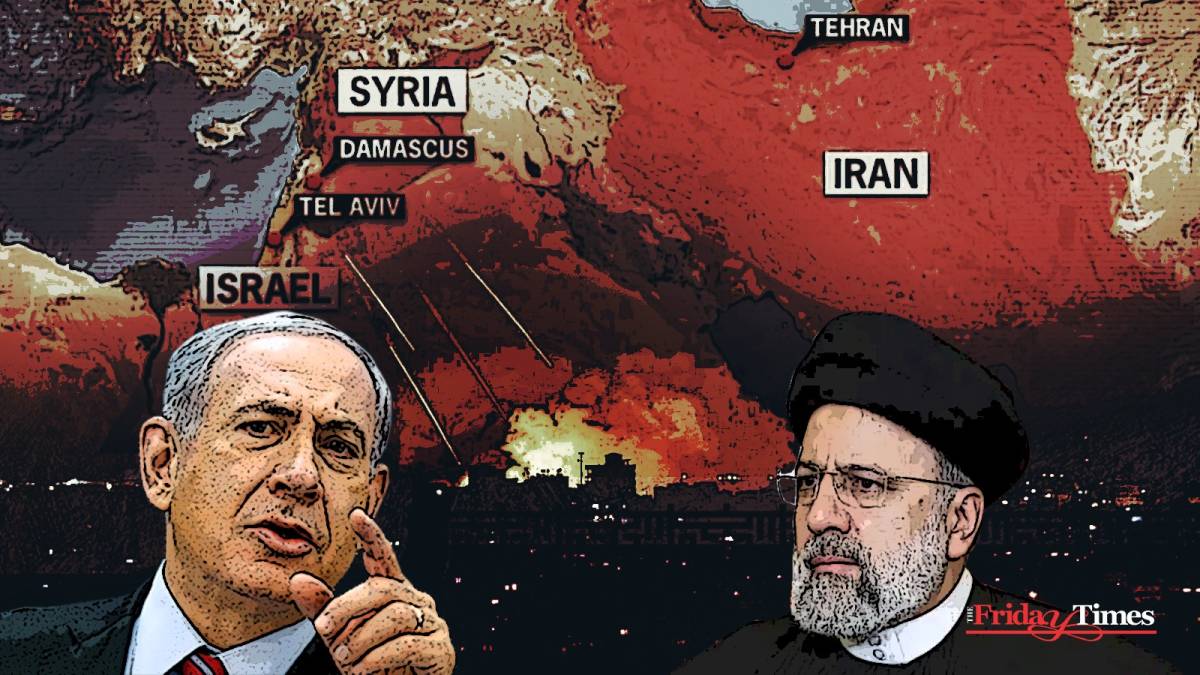
Iran launched a significant attack on Israel last Saturday. In response, Israel has issued threats of retaliation. However, the United States has stated that it will not join in any Israeli retaliatory actions. Numerous countries have urged both parties to show restraint. The BBC's security correspondent, Frank Gardner, has provided analysis on the potential trajectory of the situation.
Tehran's missile and drone strikes aimed at Israel were purportedly retaliation for Israel's alleged attack on the Iranian consulate in Syria. Nonetheless, Israel's military asserts that it has successfully intercepted 99 per cent of these missiles and drones in the air. The pressing question on everyone's mind is whether this situation could escalate into another war. Much hinges on how Israel chooses to respond to Iran's aggression.
Iran's position is along the lines of: "Account settled, that is the end of the matter, do not hit back at us or we will mount a much stronger attack against you that you will not be able to ward off."
However, the situation has become a matter of prestige for Israel. The nation has already issued threats in response to Iran's attack. Israel's current government is widely regarded as one of the most extremist in its history, which is now conducting extensive retaliatory strikes on Gaza.
The Palestinian independence group Hamas attacked Israel on October 7. Since that day, the Israeli forces have continued to attack the Palestinian Gaza indiscriminately. So it is unlikely that Israel's current wartime government will not respond to Tehran's attacks, no matter how many countries call for restraint.
Israel could launch long-range missiles at the bases from which Iran attacked yesterday if they wish to take countermeasures. Alternatively, for a more extensive response, they could target various bases, training centres, and command centres of Iran's powerful Revolutionary Guard Corps (IRGC). However, such actions would increase the risk of retaliation by Iran.
The United States maintains military installations in six Arab countries within the Gulf region. Additionally, US troops are stationed in Syria, Iraq, and Jordan. In the event of an escalation in the conflict, these US forces could become targets of Iranian missiles. Therefore, the course of action for the United States in such a scenario poses a significant question.
Iran could escalate further if subjected to a counter-attack, as they have long threatened. One such action could involve attempting to close the strategically vital Strait of Hormuz, a threat they have issued previously. They could employ tactics such as deploying mines and drones, potentially disrupting a significant portion of the world's fuel oil transportation.
The recent exchange of attacks, initiated by Israel's strike on the Iranian consulate followed by Tehran's retaliation, has sparked fears of wider regional involvement in the conflict. Governments worldwide are working tirelessly to prevent such a scenario.
However, Israel has the option of exercising strategic patience by heeding the concerns of its neighbours. This approach would involve refraining from immediate retaliation and instead targeting pro-Iranian groups such as Hezbollah in the region, a strategy Israel has employed for many years.