

Violence rages in New Caledonia as France rushes emergency reinforcements to its Pacific territory

UNB
Publish: 18 May 2024, 04:06 PM
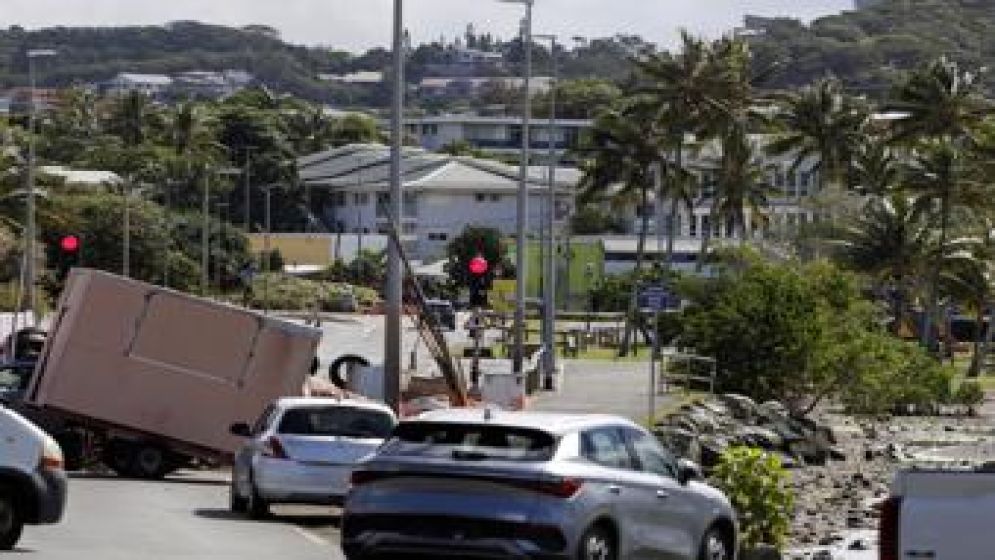
WASHINGTON,
May 16 (AP/UNB)-Violence raged across New Caledonia for the third consecutive
day Thursday hours after France imposed a state of emergency in the French
Pacific territory, boosting security forces' powers to quell deadly unrest in
the archipelago where some residents have long sought to break free from
France.
French authorities in
New Caledonia and the interior ministry in Paris reported four people,
including a police officer, have been killed in the violence after protests
earlier this week over voting reforms pushed by President Emmanuel Macron's
government turned deadly.
At least 60 members of
the security forces were injured and 214 people were arrested in the Thursday's
clashes with police, arson and looting, according to the territory's top French
official, High Commissioner Louis Le Franc.
Two members of the
island's Indigenous Kanak community were among the four dead, French Interior
and Overseas Territories Minister Gerald Darmanin said Thursday.
"The (French) state
will regain total control," Darmanin declared in a series of interviews
with French media.
The state of emergency
will be in place for at least 12 days, French Prime Minister Gabriel Attal said
Wednesday.
French military forces
were being deployed to protect ports and airports and to beef up security
forces' efforts to curb violence. The curfew has been extended until Friday
morning, Le Franc said.
The emergency powers
enable French and local authorities on the archipelago to tackle unrest, namely
by authorizing the house detention for people deemed a threat to public order
and expanding powers to conduct searches, seize weapons and restrict movements,
with possible jail time for violators.
The
last time France imposed such measures on one of its overseas territories was
in 1985, also in New Caledonia.
The Pacific island east
of Australia, home to about 270,000 people, is known to tourists for its UNESCO
World Heritage atolls and reefs. But tensions have simmered for decades between
the Indigenous Kanaks seeking independence and colonizers' descendants who want
it to remain part of France.
People of European
descent in New Caledonia, which has long served as France's prison colony,
distinguish between descendants of colonizers and descendants of the many
prisoners sent to the territory by force.
New Caledonia became
French in 1853 under Emperor Napoleon III, Napoleon's nephew and heir. It
became an overseas territory after World War II, with French citizenship
granted to all Kanaks in 1957. The island now hosts a French military base.