

Guilty: Trump becomes first former US president convicted of felony crimes

UNB
Publish: 31 May 2024, 07:37 PM
NEW
YORK, May 31 (AP/UNB) - Donald Trump became the first former American president
to be convicted of felony crimes Thursday as a New York jury found him guilty
of all 34 charges in a scheme to illegally influence the 2016 election through
a hush money payment to a porn actor who said the two had sex.
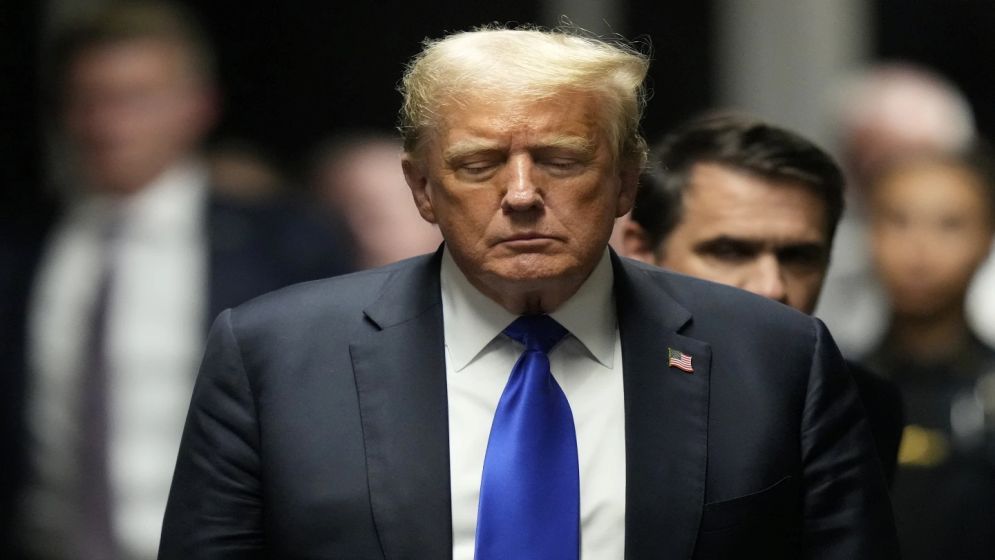
Trump sat stone-faced
while the verdict was read as cheering from the street below could be heard in
the hallway on the courthouse's 15th floor where the decision was revealed
after more than nine hours of deliberations.
"This was a rigged,
disgraceful trial," an angry Trump told reporters after leaving the
courtroom. "The real verdict is going to be Nov. 5 by the people. They
know what happened, and everyone knows what happened here."
Judge Juan M. Merchan
set sentencing for July 11, just days before the Republican National Convention
in Milwaukee, where GOP leaders, who remained resolute in their support in the
aftermath of the verdict, are expected to formally make him their nominee.
The verdict is a
stunning legal reckoning for Trump and exposes him to potential prison time in
the city where his manipulations of the tabloid press helped catapult him from
a real estate tycoon to reality television star and ultimately president. As he
seeks to reclaim the White House in this year's election, the judgment presents
voters with another test of their willingness to accept Trump's
boundary-breaking behavior.
Trump is expected to
appeal the verdict and will face an awkward dynamic as he returns to the campaign
trail tagged with convictions. There are no campaign rallies on the calendar
for now, though he traveled Thursday evening to a fundraiser in Manhattan that
was planned before the verdict, according to three people familiar with his
plans who were note authorized to speak publicly.
He's expected to appear
Friday at Trump Tower and will continue fundraising next week. His campaign was
already moving quickly to raise money off the verdict, issuing a pitch that
called him a "political prisoner."
The falsifying business
records charges carry up to four years behind bars, though Manhattan District
Attorney Alvin Bragg would not say Thursday whether prosecutors intend to seek
imprisonment, and it is not clear whether the judge - who earlier in the trial
warned of jail time for gag order violations - would impose that punishment
even if asked.
The conviction, and even
imprisonment, will not bar Trump from continuing his White House pursuit.
Trump faces three other
felony indictments, but the New York case may be the only one to reach a
conclusion before the November election, adding to the significance of the
outcome. Though the legal and historical implications of the verdict are
readily apparent, the political consequences are less so given its potential to
reinforce rather than reshape already hardened opinions about Trump.
For another candidate in
another time, a criminal conviction might doom a presidential run, but Trump's
political career has endured through two impeachments, allegations of sexual
abuse, investigations into everything from potential ties to Russia to plotting
to overturn an election, and personally salacious storylines, including the
emergence of a recording in which he boasted about grabbing women's genitals.
The case's general
allegations have also been known to voters for years and, while tawdry, are
widely seen as less grievous than the allegations he faces in three other cases
that charge him with subverting American democracy and mishandling national security
secrets.
Ahead of the verdict,
Trump's campaign had argued that, no matter the jury's decision, the outcome
was unlikely to sway voters and that the election would be decided by issues
such as inflation.
Even so, the verdict is
likely to give President Joe Biden and fellow Democrats space to sharpen
arguments that Trump is unfit for office, though the White House offered only a
muted statement that it respected the rule of law. Conversely, the decision will
provide fodder for the presumptive Republican nominee to advance his
unsupported claims that he is victimized by a criminal justice system he
insists is politically motivated against him.
Trump maintained
throughout the trial that he had done nothing wrong and that the case should
never have been brought, railing against the proceedings from inside the
courthouse - where he was joined by a parade of high-profile Republican allies
- and racking up fines for violating a gag order with inflammatory out-of-court
comments about witnesses.
After the verdict, Trump
lawyer Todd Blanche said in television news interviews that he did not believe
Trump received a fair trial and that the team would appeal based on the judge's
refusal to recuse himself and because of what he suggested was excessive
pretrial publicity.
Republicans showed no
sign of loosening their embrace of the party leader, with House Speaker Mike
Johnson lamenting what he called "a shameful day in American
history." He called the case "a purely political exercise, not a
legal one."
The first criminal trial
of a former American president always presented a unique test of the court
system, not only because of Trump's prominence but also because of his
relentless broadsides on the foundation of the case and its participants. But
the verdict from the 12-person jury marked a repudiation of Trump's efforts to
undermine confidence in the proceedings or to potentially impress the panel
with a show of GOP support.
"While this
defendant may be unlike any other in American history, we arrived at this trial
and ultimately today in this verdict in the same manner as every other case
that comes through the courtroom doors, by following the facts and the law and
doing so without fear or favor," Bragg said after the verdict.
The trial involved
charges that Trump falsified business records to cover up a hush money payment
to Stormy Daniels, the porn actor who said she had sex with the married Trump
in 2006.
The $130,000 payment
came from Trump's former lawyer and personal fixer Michael Cohen to buy Daniels'
silence during the final weeks of the 2016 race in what prosecutors allege was
an effort to interfere in the election. When Cohen was reimbursed, the payments
were recorded as legal expenses, which prosecutors said was an unlawful attempt
to mask the true purpose of the transaction.
Trump's lawyers contend
they were legitimate payments for legal services. He denied the sexual
encounter, and his lawyers argued at trial that his celebrity status made him
an extortion target.
Defense lawyers also
said hush money deals to bury negative stories about Trump were motivated by
personal considerations such as the impact on his family, not political ones.
They also sought to undermine the credibility of Cohen, the star prosecution witness
who pleaded guilty in 2018 to federal charges related to the payments, by
suggesting he was driven by personal animus toward Trump and fame and money.
The trial featured weeks
of occasionally riveting testimony that revisited an already well-documented
chapter from Trump's past. His 2016 campaign, threatened by the disclosure of
an "Access Hollywood" recording that captured him talking about grabbing
women sexually without their permission, also faced the prospect of other
stories about Trump and sex surfacing that could have harmed his candidacy.
Trump did not testify,
but jurors heard his voice through a secret recording of a conversation with
Cohen in which he and the lawyer discussed a $150,000 hush money deal involving
a Playboy model, Karen McDougal, who has said she had an affair with Trump.
Trump denies that affair.
Daniels herself
testified, offering a vivid recounting of the sexual encounter she says they
had in a Lake Tahoe hotel suite. The former publisher of the National Enquirer,
David Pecker, testified about how he worked to keep stories harmful to the
Trump campaign from becoming public at all, including by having his company buy
McDougal's story.
Jurors also heard from
Keith Davidson, the lawyer who negotiated the hush money payments on behalf of
Daniels and McDougal. He detailed the tense negotiations to get both women
compensated for their silence but also faced aggressive questioning from a Trump
attorney who noted Davidson had helped broker similar hush money deals in cases
involving other prominent figures.
The most pivotal witness,
by far, was Cohen, who during days of testimony gave an insider's view of the
hush money scheme and what he said was Trump's detailed knowledge of it.
"Just take care of
it," he quoted Trump as saying.
He offered jurors the
most direct link between Trump and the heart of the charges, recounting a
meeting in which a plan to have Cohen reimbursed in monthly installments for
legal services was discussed.
And he emotionally
described his dramatic break with Trump in 2018, when he began cooperating with
prosecutors after a decade-long career as the then-president's personal fixer.
"To keep the
loyalty and to do the things that he had asked me to do, I violated my moral
compass, and I suffered the penalty, as has my family," Cohen said.
The case, though
criticized by some legal experts who called it the weakest of the prosecutions
against Trump, took on added importance not only because it proceeded to trial
first but also because it could be the only only one to reach a jury before the
election.
The other three - local
and federal cases in Atlanta and Washington alleging that he conspired to
overturn the 2020 election, as well as a federal indictment in Florida charging
him with illegally hoarding top-secret records - are bogged down by delays or
appeals.