

UN votes to end Iraq political mission established after 2003 US-led invasion toppled Saddam Hussein

UNB
Publish: 01 Jun 2024, 02:34 PM
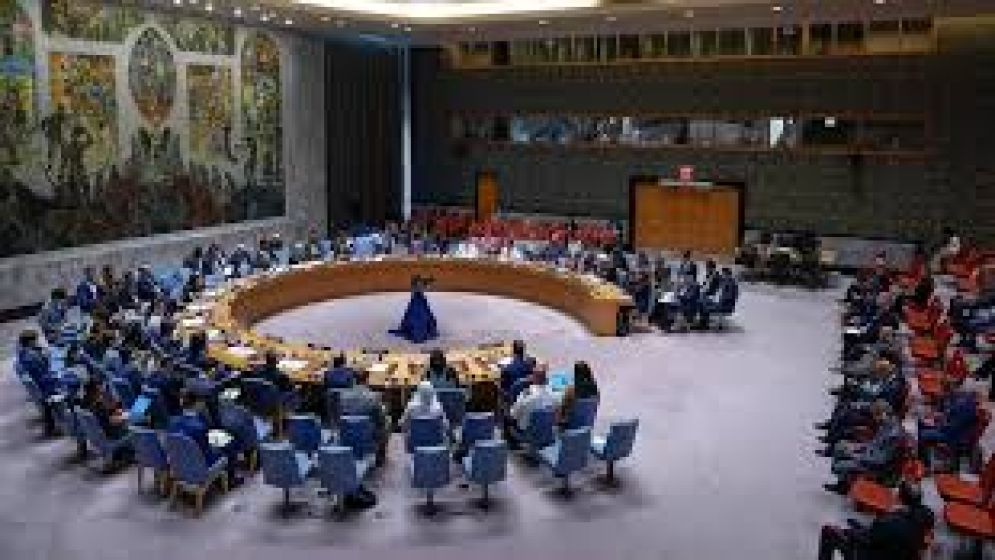
UNITED
NATIONS, June 1 (AP/UNB) - The United Nations Security Council voted
unanimously Friday to end the U.N. political mission in Iraq established in
2003 following the United States-led invasion that toppled Saddam Hussein to
coordinate post-conflict humanitarian and reconstruction efforts and to help
restore a representative government in the country.
The Iraqi government
asked the council in a May 8 letter to wrap up the mission by the end of 2025
and that's what the resolution does: It extends the mandate of the United
Nations Assistance Mission in Iraq, known as UNAMI, for a final 19 months until
Dec. 31, 2025 when all its work will cease.
The U.S.-sponsored
resolution asks Secretary-General Antonio Guterres to prepare "a
transition and liquidation plan" in consultation with the Iraqi government
by Dec. 31, 2024, so UNAMI can start transferring its tasks and withdrawing
staff and assets.
The council said it
supports Iraq's continuing stabilization efforts, including its ongoing fight
against the Islamic State group and al-Qaida extremists and their affiliates.
In 2014, the Islamic
State group declared a caliphate in large parts of Iraq and Syria and attracted
tens of thousands of supporters from around the world. The extremists were
defeated by a U.S.-led military coalition in Iraq in 2017 and in Syria in 2019,
but its sleeper cells remain in both countries.
Iraq is also seeking to
wind down the military coalition formed to fight the IS. The roughly 2,500 U.S.
troops are scattered around the country, largely in military installations in
Baghdad and in the north. Iraqi Prime Minister Mohammed Shia al-Sudani has
contended that the Iraqi security forces are capable of dealing with the
remaining IS cells in the country and the coalition's presence is no longer
needed.
Al-Sudani's office
expressed its "welcome and appreciation" for the Security Council
vote and said in a statement that the council decision "came as a result
of the tangible progress that Iraq is witnessing at various levels."
U.N. spokesperson
Stephane Dujarric said secretary-general Guterres and UNAMI are "fully
committed" to fulfilling the tasks in the resolution and "the United
Nations remains strongly committed to supporting Iraq in its aspirations for a
peaceful and secure future."
Guterres notes
"significant achievements" in Iraq since UNAMI was established in
August 2003, Dujarric said, pointing to the mission's assistance in advancing
an inclusive political dialogue in the country, holding elections, promoting
accountability, protecting human rights and coordinating the return and
reintegration of people who are displaced within the country.
The resolution adopted
Friday to close the UNAMI mission expresses support for Iraq's reform efforts
aimed at fighting corruption, respecting and protecting human rights,
delivering essential services to its people, creating jobs, and diversifying the
economy.
It asks the
secretary-general to streamline UNAMI's tasks ahead of the mission's closure to
focus on providing advice, support, and technical assistance to the government
to strengthen preparations for free elections, including for the federal
Parliament and for the Parliament in the Kurdistan region.
It also authorizes UNAMI
to facilitate progress toward finally resolving outstanding issues between Iraq
and Kuwait, stemming from Saddam Hussein's invasion of its smaller neighbor in
August 1990.
In addition, the
resolution says UNAMI should help with the return of internally displaced
Iraqis and those in Syria, with providing health care and other services and
with economic development. And it also authorizes the mission to "promote
accountability and the protection of human rights, and judicial and legal
reform."
U.S. Deputy Ambassador
Robert Wood welcomed the resolution's unanimous adoption and plans for an
orderly wind-down of UNAMI.
"We all recognize
that Iraq has changed dramatically in recent years and UNAMI's mission needed
to be realigned as part of our commitment to fostering a secure, stable, and
sovereign Iraq," he told the council.
Russia's deputy U.N.
ambassador Anna Evstigneeva stressed that what was important for Moscow in
voting for the resolution was that the United States took into account the
priorities Iraq wanted UNAMI to focus on in its final months.
"We are convinced
that in the 20 years since its establishment, UNAMI has fully realized its
potential to assist in the restoration of Iraqi statehood and that the people
of Iraq are now ready to assume full responsibility for the country's political
future," she said. "We express our firm support for Iraq sovereignty
and oppose any interference in the country's internal affairs. That is an
imperative."