

Another win for Modi but this time it tastes bitter…

Faisal Mahmud
Publish: 05 Jun 2024, 03:36 PM
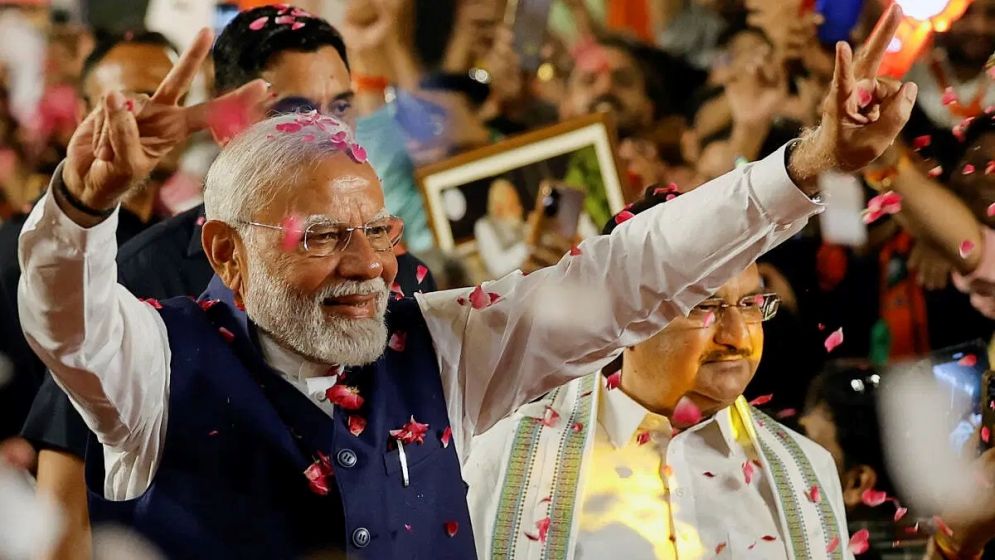
On Tuesday evening when Narendra Modi was declaring his party and alliance’s victory in India’s general election, he was furnishing his usual calm, placating yet imposing demeanor.
He was on his way to become the first Prime Minister since Jawharalal Neheru–the first PM of independent India–to sit on the throne for three consecutive times.
Yet, underneath the veneer of calmness, a nagging reality was surely biting India’s transformative and most divisive Prime Minister in the history.
Modi's political alliance–National Democratic Alliance (NDA)-- won India's weeks-long general election, but his Hindu nationalist party lost its outright majority for the first time in a decade.
With Modi's and the BJP's frequent claim of '400 paar' (more than 400) shattered, the election result in many ways has undermined Modi's political invincibility.
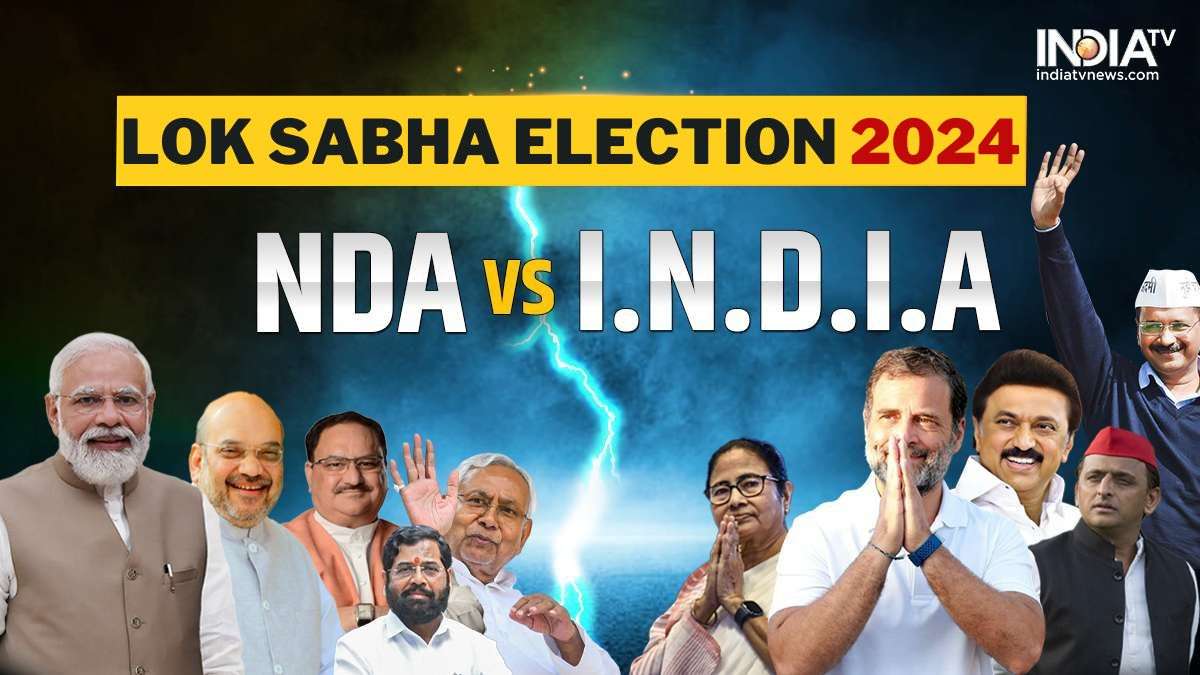 His party Bharatyio Janata Party (BJP) has
emerged as the largest single party but failed to reach the majority mark on
its own. Meanwhile, the opposition INDIA alliance led by Congress made a strong
comeback that has done the spadework for a check and balance in a democracy.
His party Bharatyio Janata Party (BJP) has
emerged as the largest single party but failed to reach the majority mark on
its own. Meanwhile, the opposition INDIA alliance led by Congress made a strong
comeback that has done the spadework for a check and balance in a democracy.
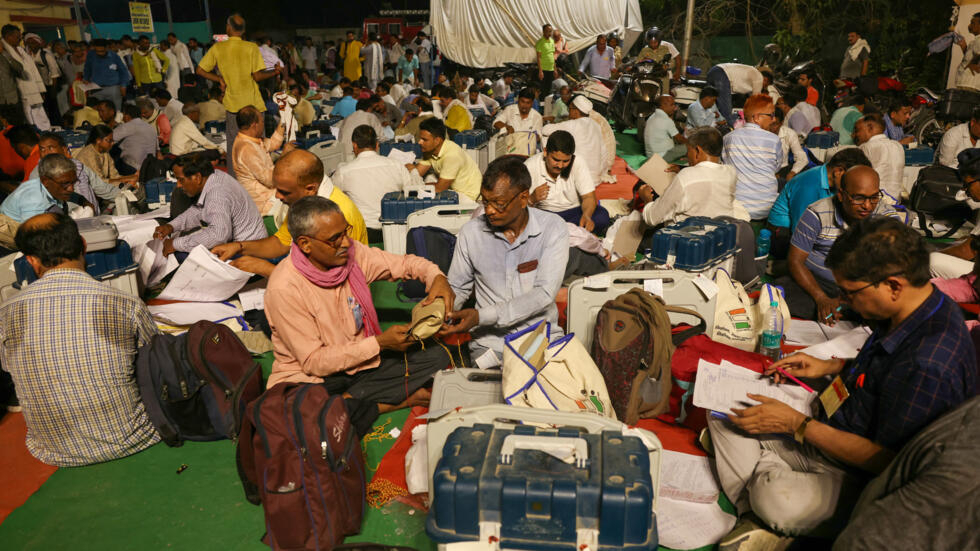
While some constituencies were yet to announce their results, Modi’s NDA coalition had garnered 272 seats, which constituted a majority in the 543-seat parliament.
The BJP alone had clinched 224 seats and was leading in 16 others, projecting a total of 240 — by far the largest party, but witnessing a notable decline from the 303 seats it secured in the previous polls in 2019.
On the other hand, the principal opposition party, Congress, had secured 88 seats and was leading in 11 more, projecting a total of 99, nearly doubling its tally from the 52 seats it attained five years ago.
The Congress-led India National Developmental Inclusive Alliance (INDIA) is projected to win around 232 seats, the poll results showed.
Modi and his BJP now need to be dependent on a clutch of allies whose support they will require to cross the 272-seat mark to form the government.
Meanwhile, Congress will become the Leader of the Opposition in the Lok Sabha, a much-needed recognition of the strength of the main opposition party with national footprints and a far cry from the BJP's ambition of a "Congress-mukt Bharat."
The outcome will also solidify Congress' dominant position in the opposition alliance, allowing it to control some regional allies such as Trinamool Congress (TMC).
Unchartered territories for Modi
This is for the first time in a decade, Modi has found himself in an uncharted territory in which he has to rely on alliance partners for staying in power.
Also, getting used to having weak parliamentary oppositions, he is now going to have a strong opposition coalition which will in all likelihood constantly breathe down his neck.
There is no doubt that in the coming days, Prime Minister Narendra Modi will have to reinvent himself, said a number of analysts, as he has never played this role before.
As Chief Minister of Gujarat, his government had an absolute majority. He did not have to depend on anyone. Even as Prime Minister, the BJP under his leadership has never had to look to anyone else.
In 2014, the government was formed with 282 seats. Five years later, he got 303 seats. This time, it has come down to 240 in one go.
Rahul Gandhi, the leader of India’s National Congress, said election results showed that the “country has unanimously and clearly” stated that it does not want Modi and his party to run the country any more.
“We do not appreciate the way they have run this country for the last 10 years so that is a huge message for Narendra Modi,” he said outside his party’s headquarters in New Delhi on Tuesday.
Modi meanwhile said people had placed their faith in the BJP-led coalition for a third time and it was a historic victory for him.
 "I bow to the people for this affection
and assure them that we will continue the good work done in the last decade to
keep fulfilling the aspirations of people," he posted on X.
"I bow to the people for this affection
and assure them that we will continue the good work done in the last decade to
keep fulfilling the aspirations of people," he posted on X.
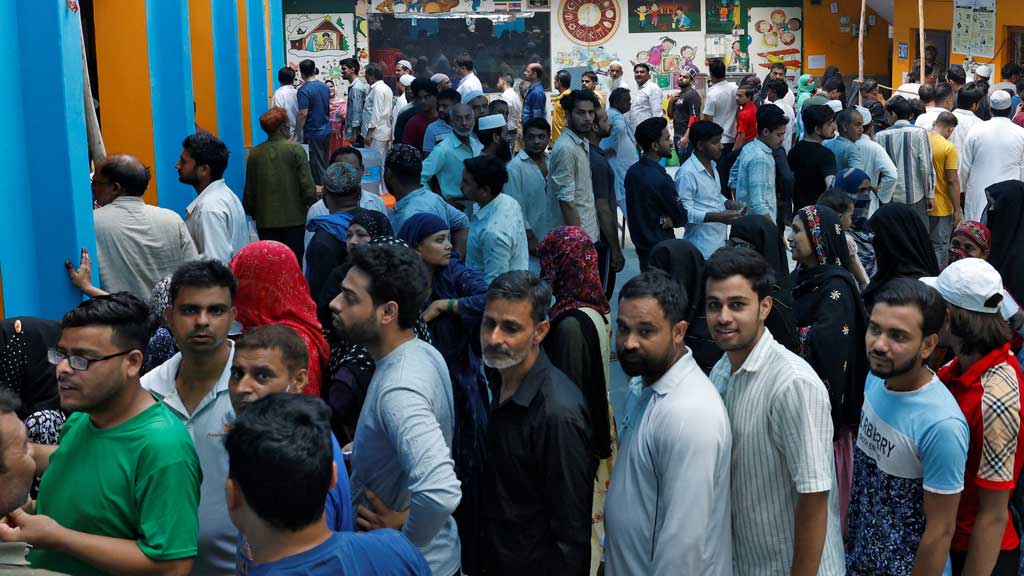
From April 19 to June 1, over 640 million people voted in polling sites across India, from the Himalayan heights to the rural forests in the west.
While turnout fell slightly from 2019's record levels, the fact that a democratically elected leader won a third term demonstrates Modi’s popularity, said analysts.
To his millions of Hindu majority fans, 73-year-old Modi is an icon whose policies have improved regular people's lives and helped realize the fledgling promise of social mobility in a country still divided by class, said Indian political analyst Sandeep Shastri.
“Yes, BJP has failed to form the government on its own, but it doesn’t necessarily mean that Modi’s popularity is on the wane,” Shastri said, “BJP is still by far the largest party in Lok Sabha.”
What does it mean for India’s democratic future?
Critics however pointed out that Modi has no experience in running a coalition government. Modi is also unfamiliar with the dynamics of coalitions as he has ruled for 10 years in a row, without regard for anyone.
“He has governed entirely according to his own will. Now he will have to learn how to humble his inflexible nature and accept the demands of his allies in order to govern in this way,” Columnist Shoumya Banerjee wrote.
Banerjee mentioned that it is difficult for an egocentric and authoritarian ruler to make this transformation overnight. This election and its results will also shatter some of Narendra Modi's dreams, Banerjee pointed out giving an example of Modi’s cherished 'one nation, one vote' policy.
“He had thought that if he came to power for a third time with a single majority, as he did in the first two times, he would implement this policy. The INDIA alliance has been opposed to this policy from the beginning, now he will not be able to do it."
Similarly, the much-publicized plan to introduce a uniform civil code will also be scrapped, Banerjee said.
Some analysts said Modi's persistent adoption of a polarizing narrative throughout much of the election campaign to counter his political adversaries actually backfired.
“It demonstrates that any emotive subject, no matter how enticing, has a shelf life and causes voter weariness if broadcast repeatedly over other more vital ones,” Political analyst Asim Ali said.
Ali pointed out the case of Ram temple in Ayodhya. The consecration of the Ram Temple, overseen by Modi, was at the forefront of the BJP’s campaign to mobilize the Hindu voters but BJP has lost in that very seat in the election.
The party also lost the key seat of Amethi, where federal minister Smriti Irani–who pulled off a spectacular win over Rahul Gandhi, the scion of the Gandhi family, by 55,000 votes in 2019– faced defeat this year.
This year, Gandhi contested from neighboring Rae Bareli constituency and won the seat by a margin more than twice the size by which Modi won his seat, Varanasi, also in Uttar Pradesh.
Columnist Banerjee aptly wrote that the election has given “a victory that feels like defeat and a defeat that is akin to a win.”