

UN nuclear agency's board votes to censure Iran for failing to cooperate fully with the watchdog

UNB
Publish: 06 Jun 2024, 04:46 PM
VIENNA,
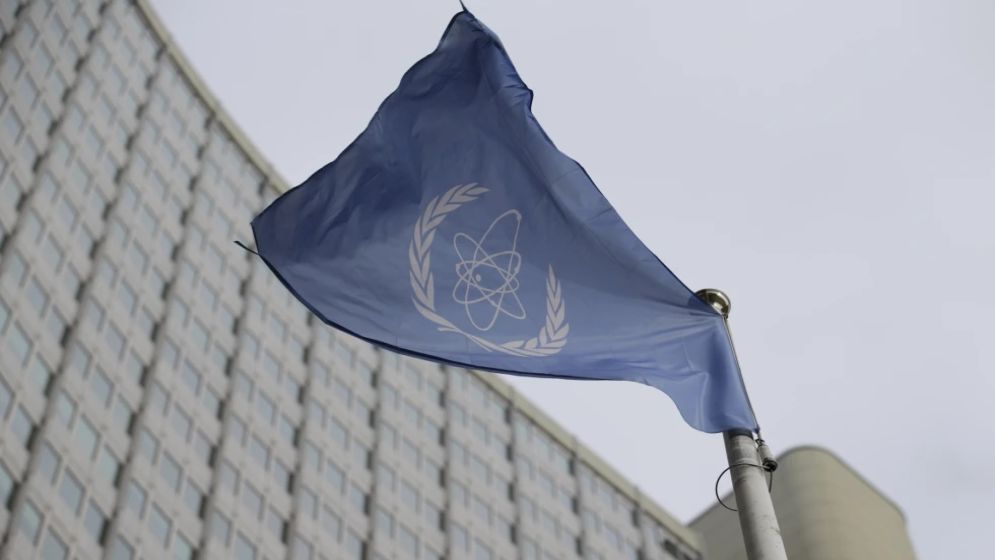
Jun 06 (AP/UNB) - The U.N. nuclear watchdog's board on Wednesday censured Iran
for failing to cooperate fully with the agency, diplomats said, calling on
Tehran to provide answers in a long-running investigation and reverse its
decision to bar several experienced U.N. inspectors.
Iran's Foreign Ministry
issued a late-night statement in response to the vote, saying it "strongly
condemns" the action taken by the IAEA's board of governors and called the
move political.
The censure followed a
report by the International Atomic Energy Agency a week ago that said Iran has
further increased its stockpile of uranium enriched to near weapons-grade
levels, the latest in Tehran's attempts to steadily exert pressure on the
international community.
The vote by the
35-member board at the IAEA headquarters in Vienna sets the stage for a likely
further escalation of tensions between the agency and Iran, which has reacted
strongly to similar previous resolutions.
"The Islamic
Republic of Iran considers the presentation and approval of this resolution to
be a political and non-constructive action and a continuation of the previous
failed policies of some Western countries and an attempt to politically abuse
international mechanisms against independent countries," the statement
from Iran's Foreign Ministry read.
Twenty members voted for
the resolution, while Russia and China opposed it, 12 abstained and one did not
vote, according to diplomats. They spoke on condition of anonymity to describe
the outcome of the closed-doors vote. The resolution was put forward by France,
Germany and Britain.
Censure resolutions by
the IAEA board are not legally binding but send a strong political and
diplomatic message.
The resolution, a draft
of which was seen by The Associated Press, called on Tehran to implement a
joint statement between Iran and the IAEA from March 2023. In that statement,
Iran pledged to resolve issues surrounding sites where inspectors have questions
about possible undeclared nuclear activity, and to allow the IAEA to
"implement further appropriate verification and monitoring
activities."
Inspectors have said two
sites near Tehran bore traces of processed uranium. The IAEA has urged Iran to
provide "technically credible" answers about the origin and current
location of the nuclear material in order for it "to be in a position to
provide assurance that Iran's nuclear program is exclusively peaceful."
While the number of
sites about which the IAEA has questions has been reduced from four to two since
2019, those lingering questions have been a persistent source of tensions.
The IAEA has identified
the sites as Turquzabad and Varamin. The IAEA has said inspectors believe Iran
used the Varamin site from 1999 until 2003 as a pilot project to process
uranium ore and convert it into a gas form. The IAEA said buildings at the site
had been demolished in 2004.
Tehran insists its
program is peaceful, though the West and the IAEA say Iran had an organized
military nuclear program until 2003.
Turquzabad is where the
IAEA believes Iran took some of the material at Varamin amid the demolition,
though it has said that alone cannot "explain the presence of the multiple
types of isotopically altered particles" found there.
In an apparent attempt
to raise the pressure on Tehran, the resolution approved Wednesday states that
IAEA Director-General Rafael Mariano Grossi may need to prepare a
"comprehensive and updated assessment" on unresolved issues
surrounding Iran's nuclear program, if there is "a continued failure by
Iran to provide the necessary, full and unambiguous co-operation" to
resolve the unanswered questions.
The statement Iran's
Foreign Ministry made in response to the censure did not include any threat to
expand its nuclear program, as had been circulated in the days before the vote.
Iran in recent months, as tensions remain high in the region over the Israel-Hamas
war, has suggested it could potentially build a nuclear weapon if it so chose.
Iran now has enough highly enriched uranium to produce "several"
atomic bombs, the IAEA has warned, though it likely would need months to
complete building one.
The IAEA board last
censured Iran in November 2022. Iran retaliated by beginning to enrich uranium
to 60% purity at its Fordo nuclear plant. Uranium enriched at 60% purity is
just a short, technical step away from weapons-grade levels of 90%.
Iran responded to a
previous resolution in June 2022 by removing IAEA cameras and monitoring
equipment from its nuclear sites.
Iran in September barred
several experienced U.N. inspectors from monitoring the country's nuclear
program. Grossi said at the time that the decision constituted "a very
serious blow" to the agency's ability to do its job "to the best
possible level."
Under a 2015 deal with
world powers, Tehran agreed to limit enrichment of uranium to levels necessary
for generating nuclear power in exchange for the lifting of economic sanctions.
At the time, U.N. inspectors were tasked with monitoring the program.
However, tensions steadily
grew between Iran and the IAEA since 2018, when then-President Donald Trump
unilaterally withdrew the United States from the nuclear deal. Since then, Iran
has abandoned all limits the deal put on its program and quickly stepped up
enrichment.
END/UNB/AP/PR