

Israel's war on Gaza decimates Palestinian families: AP documents 60 cases

UNB
Publish: 17 Jun 2024, 10:12 PM
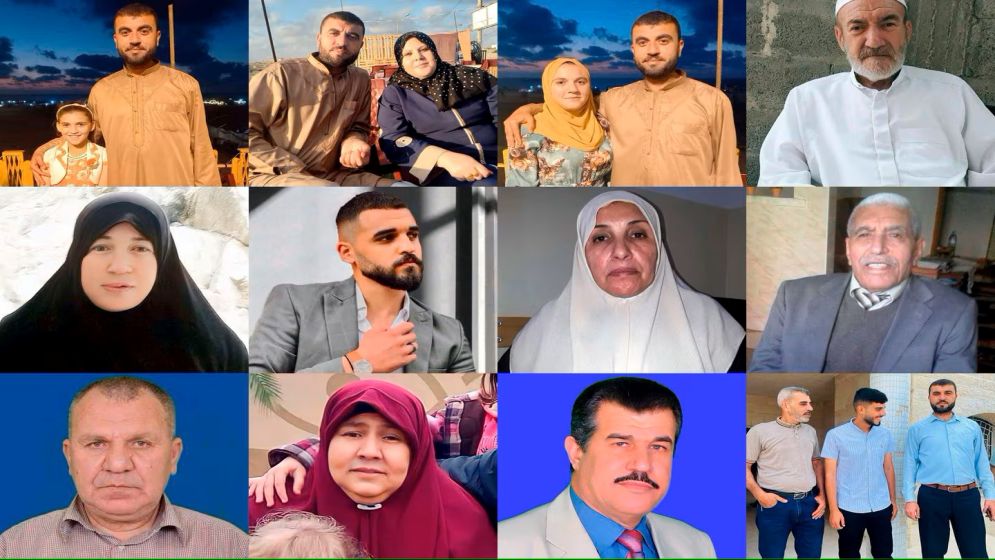
BEIRUT,
Jun 17 (AP/UNB) - He is among the very last survivors of his Gaza family, a
clan so close they knew without thinking how blood and marriage bound them
across generations and city blocks.
Then, branch by branch,
173 of Youssef Salem's relatives were killed in Israeli airstrikes in a matter
of days in December. By spring that toll had risen to 270.
Bones and flesh strewn
over the ruins of family homes. Blond curls of a young cousin peeking through
bricks. Unrecognizable bodies piled on a donkey cart. Lines of burial shrouds.
These images are what
survivors are left with from hundreds of families in Gaza like the al-Aghas,
Salems and Abu Najas.
To a degree never seen
before, Israel is killing entire Palestinian families, a loss even more
devastating than the physical destruction and the massive displacement. An
Associated Press investigation identified at least 60 Palestinian families
where at least 25 people were killed - sometimes four generations from the same
bloodline - in bombings between October and December, the deadliest and most
destructive period of the war.
Nearly a quarter of
those families lost more than 50 family members in those weeks. Several
families have almost no one left to document the toll, especially as
documenting and sharing information became harder.
Youssef Salem's hard
drive is stocked with photos of the dead. He spent months filling a spreadsheet
with their vital details as news of their deaths was confirmed, to preserve a
last link to the web of relationships he thought would thrive for generations
more.
"My uncles were
wiped out, totally. The heads of households, their wives, children, and
grandchildren," Salem said from his home in Istanbul.
In the last two decades,
10 members of his family were killed in Israeli strikes. "Nothing like
this war," he said.
The AP review
encompassed casualty records released by Gaza's health ministry until March,
online death notices, family and neighborhood social media pages and
spreadsheets, witness and survivor accounts, as well as a casualty data from
Airwars, a London-based conflict monitor.
The Mughrabi family:
more than 70 were killed in a single Israeli airstrike in December. The Abu
Najas: over 50 were killed in October strikes, including at least two pregnant
women. The large Doghmush clan lost at least 44 members in a strike on a mosque;
AP documented over 100 family members killed in following weeks. By the spring,
over 80 members of the Abu al-Qumssan family were killed.
"The numbers are
shocking," said Hussam Abu al-Qumssan, who lives in Libya and has taken
over documenting the family death toll as his relatives in Gaza struggled to
keep track.
In the 51-day war of
2014, the number of families that lost three or more members was less than 150.
In this one, nearly 1,900 families have suffered multiple deaths by January,
including more than 300 that lost over 10 members in the first month of the war
alone, according to Gaza's health ministry.
Ramy Abdu, chairman for
the Geneva-based EuroMed Human Rights Monitor, which monitors the Gaza war,
said dozens of his researchers in Gaza stopped documenting family deaths in
March after identifying over 2,500 with at least three deaths. "We can
hardly keep up with the total death toll," Abdu said.
The killing of families
across generations is a key part of t he genocide case against Israel, now
before the International Court of Justice. Separately, the International
Criminal Court prosecutor is seeking arrest warrants for two Israeli leaders
for war crimes and crimes against humanity, including for the intentional
killing of civilians, as well as for three Hamas leaders over crimes connected
to the Oct. 7 attack.
Palestinians will
remember entire families that have disappeared from their lives, Abdu said:
"It is like a whole village or hamlet has been wiped out."
Without warning
The deaths across
generations slice through the Palestinian society, history, and future. Entire
families are buried in mass graves, in hospital courtyards or beneath staircases
in the homes where they were killed.
Getting detailed images
and documentation is difficult even for Palestinians. Power is limited to
hospitals and Israel cuts communication networks frequently. Nearly all of
Gaza's 2.3 million population has been displaced, dividing families and
severing contacts between parts of the small territory. Homes that normally
would shelter a nuclear family fill with multiple generations of displaced
relatives.
Hamas militants from
Gaza attacked Israel on Oct. 7, killing 1,200 people in the deadliest day of
the Jewish state's 75-year history. Israel promised to destroy Hamas'
leadership and its estimated 35,000 fighting force in response. Within five
days, Israel Air Force dropped 6,000 bombs on Gaza, including many unguided
missiles.
Israel's relentless
bombing since has killed more than 37,000 Palestinians by early June, including
many women and children.
Eleven members of the
al-Agha family were killed in a single strike on a family home in the first
week of the war. Then death reached Khamis al-Agha's home in the second week.
Back in 2021, Khamis
al-Agha, an employee at a Hamas-linked charity, received a phone call from an
Israeli soldier alluding to his ties to the militant group and warning him to
evacuate his house in Khan Younis to avoid an impending airstrike nearby. Al-Agha
recorded the call and posted it online. He didn't evacuate and no one was
killed.
On Oct. 14 there was no
warning. The airstrike killed Khamis al-Agha and 10 others: his wife, their
four young children; his brother and his 9-year-old son and 3-year-old
daughter; his cousin and her 18-year-old boy. Only the brother's wife survived.
Jaser al-Agha, a second
cousin of Khamis, helped medics pull bodies from the debris.
"Nothing is left of
the house," said Jaser al-Agha.
Israel refused to
comment on specific strikes. In general, Israel has said it targets Hamas and
accuses the militant group of endangering civilians by operating among the
population and in tunnels below them.
A senior Israeli
official told reporters in December that the army calculated two Palestinian
civilians were killed for every Hamas militant, a ratio an army spokesman
called "tremendously positive" but which experts said showed a higher
tolerance for civilian casualties than in previous wars.
Israel estimates 15,000
Hamas militants had been killed by June, but has not given evidence or
explanation. It is not clear whether the count includes men like al-Agha, who
worked in one of the hundreds of Hamas-linked organizations or officials in the
government that administered life in Gaza for over 16 years.
Israel has said it takes
measures to mitigate agains t civilian harm, such as direct warnings to
civilians in past conflicts. But in this war, that method has been partly
replaced by evacuation orders for entire areas that not everyone is willing or
able to obey. Standards have clearly been relaxed, fueled by anger over the
Oct. 7 attacks and domestic politics, said Craig Jones, a lecturer at Newcastle
University who studied the role of Israel's military lawyers.
The law of war allows
for a "sort of rushed form of warfare" with higher civilian
casualties where a military needs to respond quickly and in changing
circumstances. But "Israel is just so clearly violating the law because
it's pushing the rules so far," he said.
The AP geolocated and
analyzed 10 strikes, among the deadliest from Oct. 7 to Dec. 24, and found they
hit residential buildings and shelters with families inside. In no case was
there an obvious military target or direct warning to those inside, and in one
case the family said they had raised a white flag on their building in a combat
zone. Together, the strikes killed more than 500 people, including the two
bombings that wiped out the Salems and three others that killed 30 members of
the al-Agha family. AP also consulted six weapons investigators, open-source
analysts and experts.
By the spring, AP
documented nearly 100 members of the al-Agha family were killed in Israeli
strikes. Jaser al-Agha has buried almost more relatives than he can count,
including three cousins he considered brothers.
"I was waiting for
my turn," he said.
When afternoon becomes
night
Ramzy Abu al-Qumssan's
family lived in the Jabaliya refugee camp since his family was displaced in
1948 from Deir Sneid, a village north of Gaza in what is now Israel. Like the
majority of Palestinians in Gaza, they are officially refugees, and the territory
is filled with semi-permanent camps that have developed into urban communities
over generations.
The Jabaliya refugee
camp, in northern Gaza, was among the most densely populated. On the afternoon
of Oct. 31, Abu al-Qumssan heard warplanes overheard, then a quick succession
of explosions.
"In a matter of
seconds, it turned into night," Abu al-Qumssan said. "It felt like
containers of explosives and iron were dropped on us. It was a very strange and
bloodcurdling sound."
Israel said it targeted
a Hamas command center in the camp. Videos, including one filmed by Abu
al-Qumssan, showed deep craters and destroyed buildings as far as the eye could
see.
"I couldn't make
out the streets from homes," he said. "People and bodies
evaporated."
He went to his uncle's
house, only to find the flimsy metal structure had been crushed into nothing.
Airwars identified 112
civilians killed in Jabaliya that day, including 69 children and 22 women. In
all, 37 members of Abu al-Qumssan's family were killed in the shack and two
nearby buildings, including four of his cousins, his aunt, her daughter and granddaughter,
whose bodies were locked in an embrace.
Of the 10 strikes
analyzed by AP, it was the only one in which Israel named a target. The toll on
innocent Palestinians was immense.
The airstrikes left
several craters, and weapons experts said they were likely caused some of the
largest bombs in Israel's arsenal, probably 2,000-pound missiles aimed at
tunnels, that are hardly used in populated areas.
Two weeks later, Abu
al-Qumssan's own house, only several meters from the large explosion, was
bombed. His wife, 5-year-old daughter, mother, two sisters and 10 other
relatives died. He and his three sons survived because their upstairs room
caved into the crater.
Abu al-Qumssan called
his daughter Nour's name over and over.
"My friend
pretended to be trying to save her to calm me down," said Abu al-Qumssan,
who as a journalist has a rare phone connection to send his images outside
Gaza. "I knew she was not coming back and that she wouldn't be pulled out
of under the rubble."
In all, 55 members of
his family perished in Jabaliya in two Israeli bombings two weeks apart. By the
spring, the family managed to document at least 82 killed, most in Jabaliya.
For the Okasha family,
the killing of at least 33 members, including grandparents, children and
grandchildren, in the Oct. 31 bombing "was a huge calamity. We are not a
big family," said Abdeljawad Okasha, 61, who lives outside of Gaza.
By May, the family
documented at least 57 members killed.
Brian Castner, a weapons
investigator with Amnesty International, said any war crimes investigation in
Gaza is complicated by the pace of the bombings, limited access for independent
entities, and a lack of forensic evidence. Since October, Amnesty has found
evidence o f direct attacks on civilians, unlawful and indiscriminate attacks
in at least 16 Israeli strikes it investigated that killed 370 civilians,
including 159 children and "decimated families." The strikes included
three as recent as April.
The last bombing
analyzed by AP hit the Maghazi refugee camp in central Gaza on Dec. 24.
Mohamed Abed, a
journalist who arrived soon after the strikes, said three explosions came less
than an hour apart. The first decimated the Musallem family. The second hit the
same road and killed several members of the Abu Hamdah family, including a
drama teacher. The last hit a house further away.
A total of 106 people
were killed from at least eight families, according to handwritten hospital
records that listed the numbers from each family, obtained by the AP. The UN
had earlier tallied 86 dead.
Israel said it was going
after Hamas militants and "mistakenly" struck two adjacent targets.
The statement is the first and a rare one in which Israel acknowledged an error
and expressed regret for the "injury to those not involved." A
military official told Kan, the Israeli public broadcaster, that the wrong
weapon was used.
The line between
military necessity and disproportionate civilian casualties is "based on
the good faith judgment of the commander making the decision" said
Geoffery Corn, a former Judge Advocate General officer and director of the
Center for Military Law and Policy at Texas Tech University. "That line is
incredibly amorphous."
In all, the AP record
included 2,700 killed from over 70 families, with some previously unknown
details on their deaths, such as where they were killed or who died along with
them.
"Everything we
build vanishes"
Kinship reaches far
beyond the nuclear family in Gaza. Compounds, frequently multiple buildings of
three stories or more, are occupied by an entire bloodline.
Extended family is an
independent economic unit, and relatives pay each other's debts, pitch in for
schools. Often, a family lends its name to a block or even an entire neighborhood.
And when formal governing structures are contested, families in Gaza usually
step in as enforcers of order - or sources of violence at times, said Ilana
Feldman, anthropology professor at George Washington University, who studied
the history of rulers of Gaza.
When the Salem family
home in northern Gaza was destroyed in 2009, Youssef and his brothers chipped
in to rebuild it for their father and uncles. It was damaged again in 2014. Now
it is a skeleton, torched from the inside.
"Everything we build
vanishes with any escalation, any war," Youssef Salem said.
After the 2021 war, he
told his wife it was time to leave with their toddler daughter. He found work
as a legal analyst in Istanbul and begged members of his extended family to
join him. He took a little bit of Gaza with him - his books, his traditional checkered
kuffiyeh scarf. His wife packed wedding and family photos and her favorite
trinkets.
After Oct. 7, he took
advantage of the safety of exile to coordinate for relatives in Gaza as they
chased shelter and food. He connected them to one another and kept them updated
with the news.
"I left Gaza, but I
still belong," said Youssef Salem, who told AP his family story over a
series of telephone interviews.
On Dec. 11, the square
that carries the family name was brimming with 150 relatives, some displaced
there and others who came for the funeral of two of their own, killed in an
earlier strike.
Battles had been raging
between Hamas and Israeli forces for days about a half-mile (kilometer) away.
Just before dawn, airstrikes hit the Salem compound. The explosions knocked
down one building, leaving a pile of debris, and sheared the facades off
several others.
Survivors deny any
fighters were in the compound. Videos showed men clawing through crushed
concrete to remove the bodies of men, women and children. A donkey cart waited
at the top of the street to transport the bodies.
Sufyan Salem, a second
cousin to Youssef, survived only because he had given over his apartment to
visitors and was sleeping down the street. Among the 80 Salem family dead: his
mother, three brothers, his only sister and her four children. At least 27 are
missing beneath rubble that has yet to be cleared away.
"Those who left us
are the ones who received some comfort. The survivors are longing for
relief," Sufyan Salem wrote on Facebook.
In Istanbul, Youssef
Salem updated the spreadsheet.
Three days later, most
of the surviving Salems followed orders from an Israeli pamphlet dropped from
an airplane to head to the Rimal neighborhood. More than 200 people were
crammed inside the abandoned two-story villa, mostly women, children, and the
elders. They raised a white flag above the home.
Israeli troops i n Rimal
were establishing bases and set up snipers on roofs. A curfew was in place for
four days. The sounds of combat echoed from an adjacent neighborhood.
Munir, his uncle,
snapped a reassuring photo of the men playing cards, a family tradition. They
even secured coal for their water pipes.
On Dec. 18, Israeli
tanks rolled in, tearing down the fence and ordering the family out. Mohamed
Salem, Youssef's 21-year-old cousin, overheard Munir and other men of the
family, who spoke Hebrew, refusing to leave.
It was the fourth time
they'd been ordered out of a shelter, and they said nowhere was safe. Besides,
they argued, the Israeli army controlled Rimal.
Mohammed Salem slipped
out to fetch water for another cousin, who was pregnant, and Sham, a baby girl
born during a brief truce in November.
Shortly after midnight,
Mohamed Salem, standing on a building across the street from their villa,
counted four direct hits from airstrikes. The villa collapsed, and bodies were
flung outside.
With snipers and
soldiers everywhere, he didn't dare approach until daybreak brought an end to
the Israeli curfew and he and a cousin watched tanks roll over relatives
half-buried in the debris. It took days longer to pull out the decomposing
bodies of his uncles, Saeed and Munir.
"There are bodies
in the ground still. No one can reach them yet," Mohamed Salem said.
He said from the house
packed with more than 200 Salems, only 10 are still alive. Nine-year-old
Abdullah is the only survivor of his bloodline - Israeli strikes killed his
father, mother and seven sisters. In May, Mohammed Salem survived two strikes
on his home that he returned to in north Gaza. Seven family members perished.
Of Gaza's 400,000
families, none has been spared, said Omar Shabaan, an independent researcher
and economist from Gaza, hurting Gaza's society, history, and future.
"Everyone is
targeted; families from all classes, poor, Bedouins, farmers, businessmen,
wealthy people who are nationalist but unaffiliated with political action.
There is no distinction," said Shabaan, whose family counts many dead,
including nine women. "It is becoming clear that this is a targeting of
the social structure."
People of Gaza will be
preoccupied for months after the war ends with looking for their missing and
removing those under the rubble, Shabaan said.
"If they find the
bodies, they will start going after the paperwork. They will start looking for
papers to prove them as humans: Their death and birth certificates, their
graduation papers, their land or home deeds," he said.
By June, the Salems'
effort to document the toll was coming apart. Yousef Salem despaired of
counting his family's dead. His cousin who took over the spreadsheet was
critically injured in a strike.
"When the family
had one martyr, it lived in grief for all its life. Imagine now," he said,
his voice cracking. "How could we still be sane after all of this?"
Now all he does is call
his mother in Gaza every day to make sure she is still alive.
END/UNB/AP/PR