

Two candidates drop out of Iran presidential election, due to take place Friday amid voter apathy

UNB
Publish: 28 Jun 2024, 06:43 PM
DUBAI,
United Arab Emirates, Jun 28 (AP/UNB) - Two candidates in Iran's presidential
election withdrew from the race as the country on Thursday prepared for the
upcoming vote, an effort by hard-liners to coalesce around a unity candidate in
the polls to replace the late President Ebrahim Raisi.
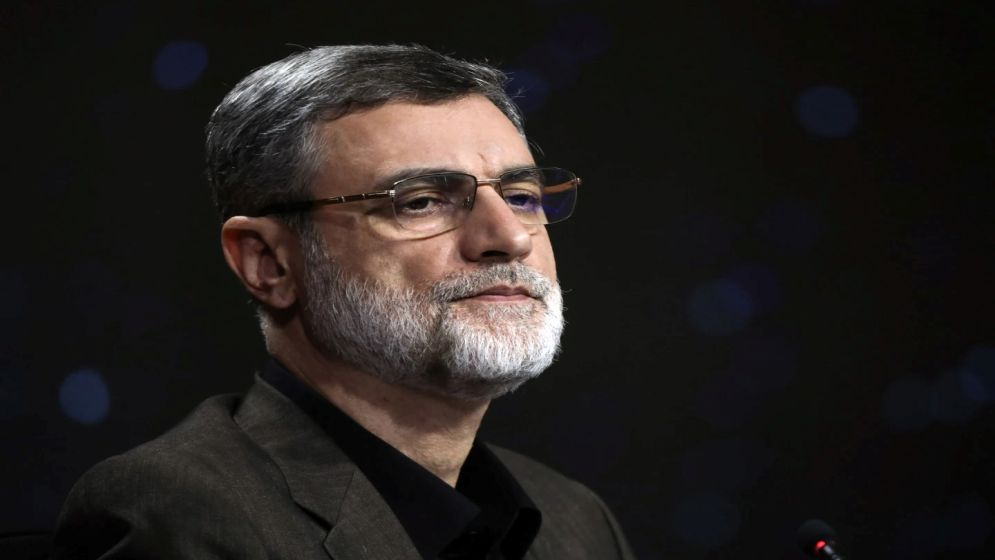
Amirhossein Ghazizadeh
Hashemi, 53, dropped his candidacy and urged other candidates to do the same
"so that the front of the revolution will be strengthened," the
state-run IRNA news agency reported late Wednesday night.
Ghazizadeh Hashemi
served as one of Raisi's vice presidents and as the head of the Foundation of
Martyrs and Veterans Affairs. He ran in the 2021 presidential election and
received some 1 million votes, coming in last place.
On Thursday, Tehran
Mayor Alireza Zakani also withdrew, as he did previously in the 2021 election
in which Raisi was voted into office.
Zakani said he withdrew
to "block the formation of a third administration" of former
President Hassan Rouhani, a reference to reformist candidate Masoud Pezeshkian.
Pezeshkian is running
with the support of former Iranian Foreign Minister Mohammad Javad Zarif, who
under Rouhani negotiated and eventually struck the 2015 nuclear deal with world
powers. The deal later collapsed and Iran has since stepped up enriching uranium
to near weapons-grade levels.
Such withdrawals are
common in the final hours of an Iranian presidential election - particularly in
the last 24 hours before the vote is held, when campaigns enter a mandatory
quiet period without rallies.
Voters go to the polls
on Friday.
The two withdrawals
leave four other candidates still in the race, which analysts broadly see as a
three-way contest.
Two hard-liners, former
nuclear negotiator Saeed Jalili and parliamentary speaker Mohammad Bagher
Qalibaf, are fighting over the same bloc, experts say. Then there's Pezeshkian,
a heart surgeon who has sought to associate himself with Rouhani and other reformist
figures like former President Mohammad Khatami and those who led the 2009 Green
Movement protest.
There had been some
speculation that either Jalili or Qalibaf could withdraw in order to strengthen
hard-liners' hands in the election. But Qalibaf repeatedly signaled he would
remain in the race, while Jalili late Thursday did the same.
"Now that I have
seen your enthusiasm, I am more determined than ever to shoulder the
responsibility," he wrote in a message posted to the social platform X.
"Now is not the time to delay. There is no time to hesitate."
With both of them
remaining in the race, that raises the possibility of a runoff election as a
candidate must get 50% of the vote to take the presidency.
Iran's theocracy under
Supreme Leader Ayatollah Ali Khamenei has maintained its stance of not
approving women or anyone urging radical change to the country's government for
the ballot. However, Khamenei in recent days has called for a "maximum"
turnout in the vote, while also issuing a veiling warning to Pezeshkian and his
allies about relying on the United States.
Widespread public apathy
has descended in the Iranian capital over the election, coming after a May
helicopter crash that killed Raisi.
After the promise nearly
a decade ago of Tehran's nuclear deal opening up Iran to the rest of the world,
Iranians broadly face crushing economic conditions and a far more uncertain
Middle East that already has seen the Islamic Republic directly attack Israel
for the first time. Iran also now enriches uranium at nearly weapons-grade
levels and has enough of it to produce several nuclear weapons if it choses.
The limited options in
the election, as well as widespread discontent over Iran's ongoing crackdown on
women over the mandatory headscarf, has some saying they won't vote.
"I did not watch
any of the debates since I have no plan to vote," said Fatemeh Jazayeri, a
27-year-old unemployed woman with a master's degree. "I voted for Rouhani
seven years ago, but he failed to deliver his promises for a better economy.
Any promise by any candidates will remain on paper only."
Worshippers in Tehran at
Friday prayers in recent weeks, typically more conservative than others in the
city, appeared more willing to vote.
Mahmoud Seyedi, a
46-year-old shopkeeper, said he and his wife, alongside two young daughters,
will vote,
"My wife and I have
decided to vote for Qalibaf since he knows how to solve problems of the country
because of years of experience, but my daughters are thinking about Jalili,
too," he said. "By the way, voting is a duty for us."
Parivash Emami, 49, who
was also at prayers, said she hoped Qalibaf could help Iran overcome its
problems.
"Qalibaf knows
details of problems, the rest are either critics or promise to solve problems
without offering any program," Emami said.
End/UNB/AP/SU