

Eastward Shift: Navigating the Changing Tides of Power in Asia

Online desk
Publish: 07 Apr 2024, 06:52 AM
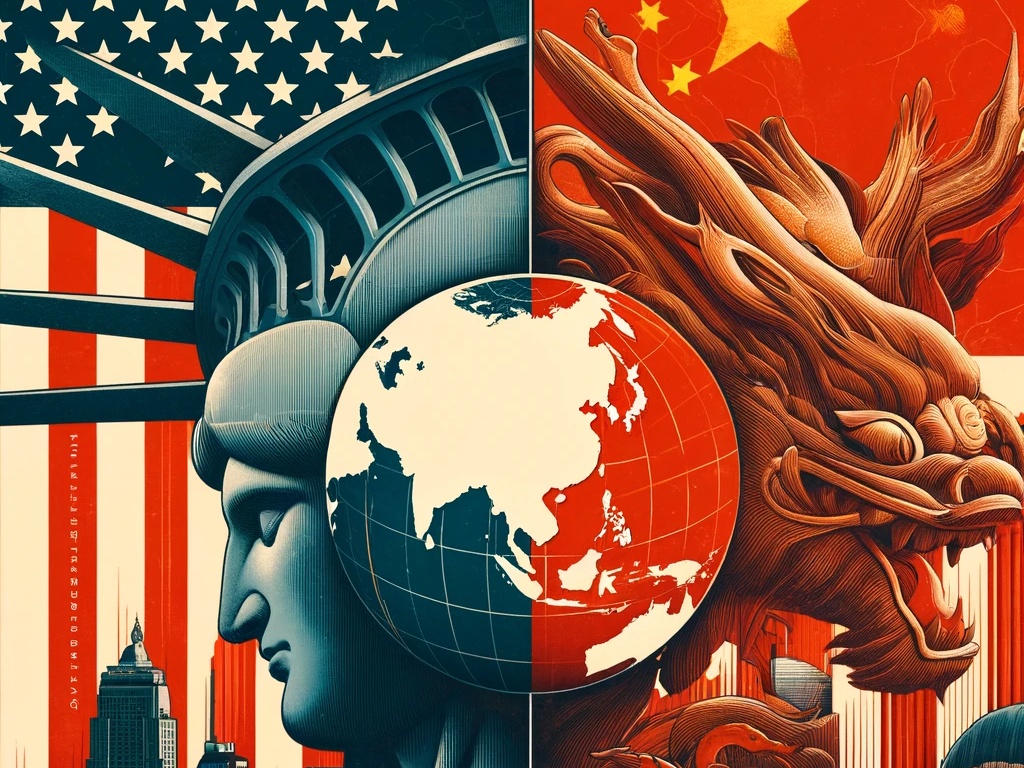
In recent years, a significant shift in geopolitical influence has been observed within the Asia-Pacific region. The United States, long considered the predominant superpower in Asia, is seemingly experiencing a gradual decline in its influence. In contrast, China's influence appears to be on an ascendant trajectory, leveraging its economic might, diplomatic initiatives, and military capabilities to expand its regional clout. This article aims to analyze the factors contributing to this shift, the implications for regional dynamics, and potential future outcomes.
Economic Leverage and Belt and Road Initiative
A pivotal aspect of China's rising influence in Asia is its economic leverage. China has become a central trade partner for many Asian countries, surpassing the United States in some cases. The Belt and Road Initiative (BRI), launched by China in 2013, aims to enhance regional connectivity and embrace a brighter economic future through infrastructure investment and development projects across Asia and beyond. The BRI represents a strategic push by China to gain significant geopolitical influence through economic means, offering countries infrastructure loans that not only boost their economies but also increase their dependence on China.
Technological Advancements and Digital Silk Road
China's focus on technological advancements has further solidified its position in Asia. The Digital Silk Road, an offshoot of the BRI, aims to enhance digital infrastructure in participating countries. By leading in 5G technology deployment and other digital innovations, China is positioning itself as an indispensable tech partner in the region, further extending its influence.
Military Presence and Security Concerns
Militarily, China has been expanding its presence in the South China Sea, constructing artificial islands and militarizing them, despite international disputes and concerns from neighboring countries. This assertive stance showcases China's willingness to leverage its military capabilities to secure its interests and project power, challenging the traditional security arrangements underpinned by U.S. military presence in the region.
U.S. Strategic Challenges and Responses
On the other hand, the United States faces several challenges in maintaining its influence in Asia. The pivot to Asia strategy, announced in the early 2010s, intended to reinforce U.S. engagement in the region. However, varying commitments to this strategy by subsequent administrations and domestic political challenges have led to perceptions of an inconsistent U.S. policy towards Asia. Furthermore, trade tensions between the U.S. and several Asian countries have at times strained relationships, making regional partners wary of relying too heavily on the U.S.
China's Soft Power and Diplomatic Efforts
China has also been making significant inroads through soft power and diplomatic efforts. By promoting its culture, investing in educational exchanges, and increasing its contributions to UN peacekeeping missions, China is building its image as a responsible global leader. Its diplomacy has focused on non-interference in the domestic affairs of other countries, which, despite criticism, has appealed to several Asian governments.
Implications for Regional Dynamics
The shifting balance of power has profound implications for regional dynamics. Countries in Asia are increasingly finding themselves needing to navigate a delicate balance between the U.S. and China, often opting not to choose sides but to maximize their benefits from both. This balancing act, however, comes with its own set of challenges and uncertainties.
Potential Future Outcomes
Looking ahead, the U.S. and China are likely to continue their competition for influence in Asia. The U.S. may need to reassess its strategy in the region, potentially focusing more on multilateralism, economic engagement, and reaffirming its security commitments. For China, sustaining its rise without provoking a counterbalancing coalition involves careful diplomacy and addressing concerns related to its assertive behavior.
The narrative of a declining U.S. influence and a rising China in Asia is shaped by a complex interplay of economic, military, and diplomatic factors. While China has made significant strides, the United States remains a key player in the region. The future of Asia's geopolitical landscape will likely be characterized by a dynamic interplay between these two superpowers, with regional countries navigating this environment to secure their own national interests.
While China's influence in Asia appears to be on the rise, several factors suggest that its ascendancy may not be sustainable in the long term. These challenges range from internal economic and social pressures to the complex dynamics of international relations and the potential for increased resistance from other nations within the region and beyond.
Firstly, China's economic model, which has been a significant driver of its influence, faces serious challenges. The rapid growth rates of the past few decades are slowing down, and the country is grappling with issues such as an aging population, rising labor costs, and significant environmental degradation. These factors could limit China's economic power and, by extension, its ability to project influence abroad.
Additionally, the Belt and Road Initiative (BRI), while ambitious, has stirred controversy and pushback in several countries due to concerns over debt sustainability, transparency, and the environmental impact of projects. The so-called "debt-trap diplomacy" has led to growing wariness among some of China's partners, potentially undermining China's influence and leading to greater scrutiny and resistance to Chinese investments and projects.
Internally, China faces significant social challenges, including demands for greater political freedoms and human rights, which could lead to internal instability. The central government's tight control over information and its crackdown on dissent have drawn international criticism, which could tarnish China's global image and affect its soft power.
Furthermore, the international community, led by powers like the United States and the European Union, has begun to take a more coordinated approach in responding to China's rise. Efforts to diversify supply chains, invest in alternative infrastructure projects, and strengthen regional security alliances are all part of a broader strategy to counterbalance China's growing influence.
Lastly, China's aggressive foreign policy and territorial claims, particularly in the South China Sea, have alarmed its neighbors and contributed to the formation of informal alliances seeking to counterbalance Beijing's ambitions. Such regional dynamics could lead to increased isolation or even confrontation, hampering China's influence.
While China's rise in Asia is undeniable, its long-term sustainability as the preeminent regional power is far from guaranteed. Economic, social, environmental, and geopolitical challenges could constrain China's ability to maintain its current trajectory of influence, leading to a more multipolar and balanced regional order.